

Professional tree services Buckhead Atlanta: Expert Care for Historic Properties
Buckhead’s tree-lined streets and mature landscapes define the character of Atlanta’s most prestigious neighborhood. From the sprawling estates along West Paces Ferry to the established homes in Tuxedo Park and Chastain Park, the trees that shade your property represent decades of growth and significant value to your home.
At Francisco’s Trees 24/7, we understand that Buckhead homeowners require more than basic tree services—you need expertise, discretion, and a commitment to preserving the elegance that defines your property.
Understanding Buckhead's Unique Tree Care Needs
The mature hardwood canopy throughout Buckhead creates a distinctive aesthetic, but these majestic trees require specialized attention. Many properties feature:
Historic oaks that predate the neighborhood’s development, some over 100 years old. These massive specimens require expert assessment to evaluate structural integrity and health. Their extensive root systems and broad canopies demand careful management to prevent storm damage while preserving their grandeur.
Southern magnolias that provide year-round elegance but require careful maintenance. These evergreen beauties can reach 80 feet in height with sprawling branches that need strategic pruning to maintain their iconic form while preventing breakage during ice storms and high winds.
Flowering dogwoods that demand precise pruning to maintain their iconic spring display. These understory trees thrive in Buckhead’s mature canopy but require disease management and careful pruning to preserve their distinctive horizontal branching pattern.
Towering pines that can pose risks during Georgia’s storm season. Loblolly and white pines reaching 60-90 feet create significant hazards when damaged, requiring proactive assessment and maintenance.
The combination of large mature trees, established root systems, and proximity to historic homes demands professional arborists who understand both tree biology and the architectural significance of your property.
Preventive Tree Care: Protecting Your Investment
In neighborhoods where homes represent multi-million dollar investments, preventive tree care isn’t optional—it’s essential property management. Our certified arborists provide comprehensive services designed to protect your property while preserving the natural beauty that enhances your home’s value.
Health Assessments and Risk Evaluation
Regular professional inspections identify potential issues before they become emergencies. We examine your trees for signs of disease, structural weaknesses, and storm vulnerability. In Buckhead’s older neighborhoods, trees may show advanced age while appearing healthy, requiring expert evaluation to determine their stability.
Our arborists assess crown structure, looking for weak branch unions, co-dominant stems, and included bark that indicate potential failure points. We evaluate trunk condition, checking for cavities, decay, and signs of disease. Root zone inspection reveals girdling roots, soil compaction, and drainage issues that compromise tree stability.
For properties with trees exceeding 50 feet in height, we provide detailed risk assessments that evaluate potential impact zones. Trees overhanging structures, high-traffic areas, or neighboring properties receive priority attention in our evaluation process.
Strategic Pruning and Canopy Management
Proper pruning maintains your trees’ health while enhancing your property’s curb appeal. We remove deadwood that poses fall risks, thin dense canopies to reduce wind resistance during storms, and shape growth patterns to complement your home’s architecture.
For Buckhead’s signature magnolias and oaks, precise pruning preserves their majestic form while preventing branch failure. We follow industry standards for pruning mature trees, never removing more than 25% of living crown in a single season. Our cuts promote rapid wound closure while maintaining natural branch architecture.
Canopy raising improves clearance over driveways, structures, and pedestrian areas while maintaining the shade canopy that makes Buckhead properties so desirable. We selectively remove lower limbs to enhance sight lines and increase light penetration without compromising the tree’s health or aesthetic value.
Crown reduction addresses trees that have outgrown their space or show signs of structural stress. Using proper reduction cuts to lateral branches, we decrease overall tree size while maintaining natural form—essential for trees near structures or utility lines.
Root Zone Management
Many Buckhead properties feature trees with root systems that can impact foundations, driveways, and underground utilities. Our team provides expert root management that protects your infrastructure without compromising tree health.
Surface roots that create trip hazards or damage hardscaping require careful attention. We evaluate whether roots can be pruned safely or if alternative solutions like root barriers or pathway modifications better serve both tree and property.
For trees near foundations, we assess root proximity and provide recommendations for protecting structures while maintaining tree health. Root barriers installed during construction or renovation projects prevent future conflicts while allowing trees to thrive.
Soil compaction from construction, vehicle traffic, or pedestrian use compromises root health. We provide soil aeration treatments that improve oxygen availability and water infiltration, helping established trees maintain vigor despite urban pressures.
We understand the delicate balance between preserving mature trees and protecting the significant investments in your property’s hardscaping and structures. Our solutions prioritize both tree health and property protection.
Contact Now
Your trees deserve expert attention from certified professionals who understand their value to your property and your neighborhood. Whether you need routine maintenance, storm preparation, expert removal, or landscape enhancement guidance, Francisco’s Trees 24/7 brings the experience and expertise your Buckhead estate deserves.
Contact us today for a complimentary property evaluation. Our certified arborists will assess your trees, identify opportunities for enhancement and risk reduction, and provide recommendations tailored to your property’s unique character and your specific goals.
Available 24/7 for emergencies. Serving all of Buckhead including Tuxedo Park, Chastain Park, Argonne Forest, Brookwood Hills, Peachtree Park, Garden Hills, and surrounding North Atlanta neighborhoods.
Buckhead presents a combination of challenges that sets it apart from any other area in the metro Atlanta market. The neighborhood’s historic tree canopy includes specimens that predate the neighborhood’s development by decades — some oaks and magnolias are over 100 years old and require expert assessment techniques that go well beyond what standard tree service companies offer. Properties along West Paces Ferry, Tuxedo Park, Chastain Park, and Argonne Forest feature trees with massive root systems that interact with historic foundations, underground utilities, and high-end hardscaping like circular driveways and stone walkways. The density of mature trees in close proximity to multi-million dollar estate homes means every removal or major pruning decision carries significant structural, aesthetic, and financial consequences. City of Atlanta tree ordinances in Buckhead are among the strictest in Georgia — most trees above 6 inches DBH require permits, and replacement requirements apply in many cases. Francisco’s Trees 24/7 brings ISA-certified arborist expertise specifically suited to these high-stakes, high-complexity Buckhead tree care scenarios.
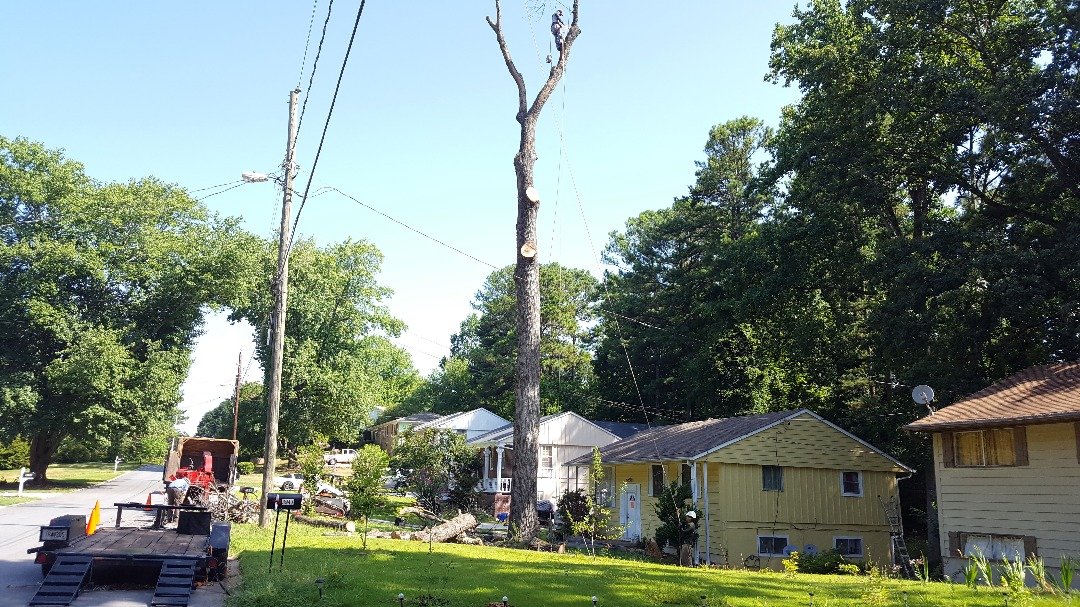
Managing 80–100 year old oaks on Buckhead estates requires a fundamentally different approach than standard residential tree work. Before any cut is made, our ISA-certified arborists conduct a full structural assessment identifying the precise stress vectors and weight distribution of the tree — this determines exactly how each section will move when cut, which is critical for protecting adjacent structures, hardscaping, and neighboring trees. We use professional rigging systems — ropes, pulleys, and lowering devices — to control exactly where each branch section descends rather than letting anything fall freely. For estate properties with narrow driveways, ornamental gardens, or limited equipment access, we use manual climbing techniques with mechanical advantage systems that allow precise control without heavy machinery on your lawn. We place protective plywood and rubber mats over all hardscaping in the work zone. For trees in confined spaces between structures — common on Buckhead’s older estate lots — we section the tree piece by piece from the top down, lowering each section to the ground in a controlled sequence. Every aspect of the job is planned before a single cut is made.
Yes — and Buckhead falls under the City of Atlanta’s tree ordinance, which is one of the most comprehensive and strictly enforced in Georgia. In Atlanta, trees with a trunk diameter of 6 inches or more measured at breast height (DBH) generally require a Tree Removal Permit from the City’s Office of Buildings before removal. For trees on properties within Buckhead’s historic districts or in proximity to certain protected greenspaces, additional review may apply. The permit process requires documentation of the tree’s condition, the reason for removal, and often a replacement planting plan — the City of Atlanta enforces a canopy replacement requirement that specifies how many replacement trees must be planted or a fee paid into the tree fund. Violations of Atlanta’s tree ordinance result in significant fines and mandatory replanting at the property owner’s expense. Francisco’s Trees 24/7 handles the full permit process for Buckhead removals — we prepare the documentation, submit the application, and coordinate with the City on your behalf so your project proceeds legally and without delay. Call (678) 940-6503 before making any removal decision on your Buckhead property.
Southern magnolias are one of Buckhead’s most iconic landscape trees, and they require a pruning approach that most general tree services don’t fully understand. The most critical principle is that magnolias should never be topped — removing the central leader destroys their natural pyramidal form permanently and creates multiple weak competing stems that are structurally inferior and aesthetically ruined. Proper magnolia pruning focuses on selective thinning of interior branches to reduce weight and wind resistance, removal of dead, crossing, and rubbing branches, and careful shaping of the outer canopy perimeter to maintain the tree’s natural silhouette. Lower limb removal (canopy raising) should be done gradually over multiple seasons — removing too many lower limbs at once stresses the tree and can trigger disease susceptibility. Magnolias are also sensitive to the timing of pruning; major work is best done in late spring after flowering ends, avoiding the fall and early winter period when wounds heal more slowly in Georgia’s cooling temperatures. Our ISA-certified arborists are specifically trained in ornamental tree pruning technique — a different discipline than the structural pruning applied to shade trees.
Buckhead’s mature, densely canopied tree population creates conditions where several diseases and pests are particularly active. Oak wilt is an increasing concern in Atlanta-area oaks — a fungal disease that blocks water transport in the vascular system and can kill an infected red oak within weeks; it spreads through root grafts between neighboring trees and through sap-feeding beetles, making early detection and proper pruning wound treatment critical. Thousand cankers disease affects black walnut trees found on some estate properties and has been detected in Georgia. Dogwood anthracnose is a fungal disease that has severely impacted flowering dogwood populations throughout Buckhead and North Atlanta, causing leaf spotting, twig dieback, and eventual tree death if untreated — proper pruning, fungicide treatment, and canopy thinning to improve air circulation are the primary management strategies. Ambrosia beetles attack stressed trees, particularly pines and magnolias, boring into trunks and introducing fungal pathogens. Pine bark beetles are an ongoing concern for Buckhead’s loblolly pines, especially during drought stress periods. Our certified arborists assess your specific trees for these and other health threats during property evaluations and recommend targeted management plans.
Yes — we regularly coordinate with HOA boards, estate managers, and property management companies throughout Buckhead and North Atlanta. We understand that high-value residential communities have specific standards for how contractors operate on and near their properties, and we accommodate these requirements as a standard part of our service. For HOA-managed Buckhead communities, we provide formal written proposals with detailed scope of work, crew arrival and departure time windows, equipment access plans that respect community traffic regulations, certificates of insurance meeting HOA minimum requirements, and written work completion reports for your records. For estate properties managed by third-party property managers, we coordinate all scheduling, access, and communication through your designated representative. We never show up with unmarked vehicles or crews that don’t meet the professional presentation standards Buckhead properties expect. Our team operates in uniform, with identified company vehicles and equipment, and we hold a pre-job site walk before every significant project so you know exactly what to expect.
Root-related conflicts between mature trees and hardscaping or foundations are one of the most common challenges on Buckhead estate properties, where large oaks and magnolias have had decades to establish extensive root systems. It’s important to understand that tree roots seek water and oxygen, not structures — they don’t actively “attack” foundations, but they will exploit existing cracks and gaps where moisture is available. For driveways and walkways, surface roots that have lifted pavers or cracked concrete create both trip hazards and aesthetic problems; our approach evaluates whether root pruning is safe for the tree’s stability before any cuts are made, and we never remove roots that are primary structural anchors. For foundations, most healthy foundations are not compromised by tree roots directly — but roots can cause differential soil moisture changes that lead to foundation movement in Georgia’s expansive clay soils. Root barriers installed along pathways or foundation edges redirect root growth away from structures while preserving the tree. Soil aeration treatments improve root health in compacted areas, reducing the stress-driven search for moisture that leads roots toward irrigation lines and foundation cracks. We assess each situation individually — in many cases, removing a surface root is not the right answer, and we’ll tell you that honestly.
Yes — Buckhead is within our 24/7 emergency response coverage throughout Fulton County, and we treat estate property emergencies with the additional care and expertise that complex high-value properties demand. When a large historic oak or magnolia falls on a Buckhead estate during a storm, the stakes are different from a typical residential call — you may be dealing with a tree resting on a slate roof, an antique pergola, a greenhouse, or a multi-car garage, each requiring a specific removal approach that protects the structure while managing the weight and tension of the fallen tree. Our emergency Buckhead response includes ISA-certified arborist assessment before any cuts are made, professional rigging systems to control all removal, immediate coordination with your estate manager or HOA contact if requested, emergency tarping of any exposed roof areas using commercial-grade materials, and full before-and-after documentation for your insurance claim. For Buckhead properties with gated access, please save our number (678) 940-6503 in your phone now and share our contact with your estate manager — during a 3 AM storm emergency is not the time to locate a contractor for the first time.


