

Professional Tree Services Brookhaven and Sandy Springs: Preserving Atlanta's Urban Forest
Brookhaven and Sandy Springs represent some of metro Atlanta’s most desirable intown communities, where mature tree canopies define neighborhood character and contribute significantly to property values. These established areas combine older growth trees with newer landscaping, creating unique care requirements that demand professional expertise.
Francisco’s Trees 24/7 provides comprehensive tree services throughout Brookhaven, Sandy Springs, and surrounding North DeKalb and North Fulton communities, protecting the mature urban forest that makes these neighborhoods exceptional. From Historic Brookhaven’s tree-lined streets to Sandy Springs’ established subdivisions, we bring certified expertise and professional care to every property.
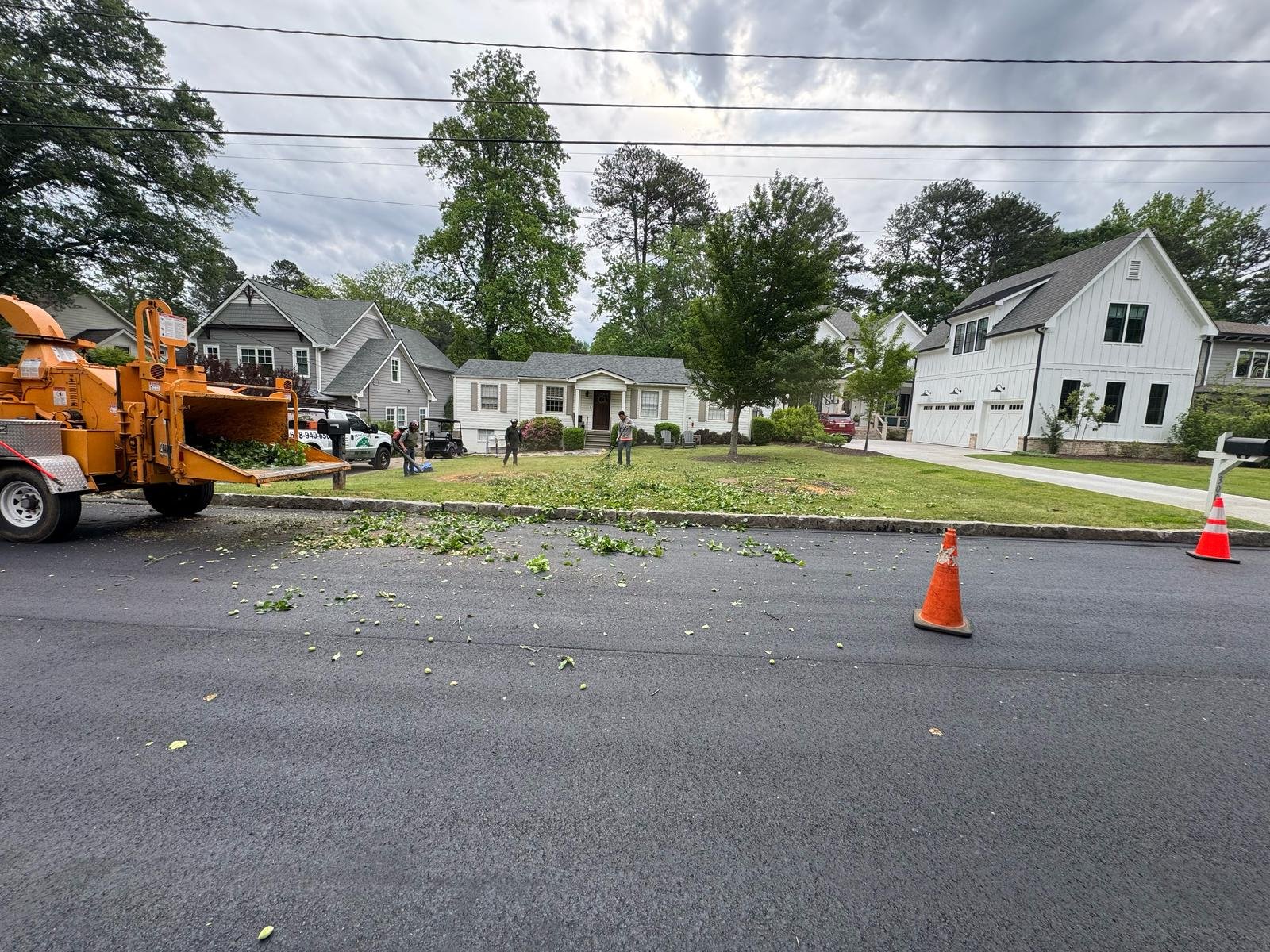
The Value of Mature Trees in Intown Atlanta
In Brookhaven’s Ashford Park, Lynwood Park, and Historic Brookhaven, and throughout Sandy Springs’ established neighborhoods, mature trees provide benefits that extend far beyond aesthetics. Understanding these values helps homeowners appreciate the importance of professional tree care.
Substantial shade reducing cooling costs during Georgia’s long summers can lower air conditioning expenses by 20-40% for well-shaded homes. Mature trees create microclimates that moderate temperatures, reducing energy consumption while improving outdoor comfort throughout the hottest months.
Privacy screening in areas where lots are closer together than newer suburbs becomes increasingly valuable as intown properties appreciate. Mature trees provide natural screening that maintains privacy without the expense and maintenance of fence installations or artificial barriers.
Storm water management helping prevent flooding during heavy rains becomes critical in developed areas where impervious surfaces prevent natural infiltration. Mature tree canopies intercept rainfall, while extensive root systems absorb water that would otherwise contribute to flooding and erosion.
Property value enhancement is substantial—homes with mature trees command premium prices in competitive markets. Studies consistently show mature landscaping, particularly tree coverage, increases property values by 7-19%, with larger impacts in established neighborhoods where trees distinguish properties.
Wildlife habitat supporting birds, beneficial insects, and other species creates living landscapes that connect residents to nature despite urban locations. The urban forest provides critical corridors for wildlife movement and breeding habitat that supports biodiversity throughout metro Atlanta.
These benefits make professional tree care an essential investment in property protection and enhancement, preserving assets that took decades to develop while ensuring safety and continued enjoyment.
Common Tree Challenges in Established Intown Communities
Properties in Brookhaven and Sandy Springs often feature trees planted 30-50 years ago, creating specific maintenance needs that differ from both newly planted and ancient specimens. Understanding these challenges helps homeowners recognize when professional intervention becomes necessary.
Aging Tree Management
Mature oaks, pines, and hardwoods that define your property may show signs of decline requiring expert assessment. Trees in their mature phase face increasing risks from disease, structural failure, and environmental stress that weren’t concerns during their vigorous growth years.
Structural evaluation identifies hidden weaknesses in mature trees. Cavities from old wounds, decay in major limbs, and root diseases may not be visible from ground level but create significant hazards. Our certified arborists use advanced techniques including resistograph testing and aerial inspection to evaluate tree integrity thoroughly.
Declining vigor signals potential problems requiring intervention. Reduced leaf size, sparse canopies, dead branch tips, and slow growth all indicate trees under stress. Early identification allows treatments that may save trees or timely removal before trees become extreme hazards.
Species-specific aging patterns require expert knowledge. Different tree species age at different rates and show characteristic decline patterns. Oaks may remain healthy for centuries, while pines often decline after 40-60 years. Understanding these patterns allows appropriate care recommendations for your specific trees.
Root System Conflicts
Decades of growth mean root systems may now impact foundations, sidewalks, driveways, and utility lines. Managing these conflicts while preserving valuable trees requires expertise in both tree biology and construction practices.
Foundation impacts from tree roots occur when roots enter the moisture-controlled zone beneath structures. As roots extract moisture from foundation soils, settlement and cracking can result. We evaluate root-foundation relationships and recommend solutions that protect structures while preserving trees when possible.
Hardscape damage from surface roots creates trip hazards, damages concrete, and complicates property maintenance. Roots that were underground when driveways and sidewalks were installed may surface decades later as trees mature. Our solutions include root pruning, barriers, or in some cases removal when conflicts cannot be resolved.
Utility line conflicts become increasingly problematic as root systems expand. Sewer lines, water mains, and underground utilities may be compromised by root intrusion decades after installation. We coordinate with utility companies and use specialized techniques to address these conflicts without unnecessarily sacrificing trees.
Soil compaction from decades of foot traffic, vehicle parking, and settlement compromises root health in established landscapes. Compacted soils lack the oxygen and water infiltration necessary for healthy roots. Our soil remediation treatments can restore health to valuable trees suffering from compaction stress.
Storm Damage Susceptibility
Large trees in urban settings face unique storm risks that increase as trees mature. Dense neighborhoods mean fallen trees can impact multiple properties, while mature specimens may have hidden structural weaknesses requiring professional evaluation.
Wind resistance increases dramatically with canopy size and height. Trees that weathered storms successfully in their youth may become vulnerable as they reach mature dimensions. Large canopies act as sails during high winds, creating forces that can uproot or break even healthy trees.
Ice loading during winter storms stresses branches accustomed to milder conditions. Georgia’s occasional ice storms can accumulate inches of ice on branches, creating weight loads trees aren’t structurally prepared to support. Proper pruning reduces ice accumulation while maintaining tree health and aesthetics.
Co-dominant stems without strong unions are common in urban trees that didn’t receive proper early training. These weak attachments create failure points during storms. Identification and cabling of weak unions or removal of co-dominant stems reduces failure risk significantly.
Lightning strike susceptibility increases with tree height and species. Tall trees, particularly oaks and pines, attract lightning strikes that can explosively damage trees and threaten nearby structures. Lightning protection systems preserve valuable trees while protecting property from strike damage.
Construction Impact
Renovation projects, additions, and nearby new construction can stress established trees through root damage, soil compaction, and grade changes. These impacts often don’t manifest immediately but can cause decline or failure months or years after construction completion.
Root zone disturbance from excavation removes portions of root systems that cannot regenerate quickly. Trees can survive moderate root loss but extensive damage compromises both stability and health. We assess construction damage severity and determine whether trees can recover or require removal.
Grade changes that bury or expose roots alter moisture, oxygen availability, and root zone temperature. Trees buried too deeply develop trunk rot and decline over several years. Exposed roots face desiccation and damage from mowers and foot traffic. While some remediation is possible, severely affected trees may not survive.
Soil compaction from heavy equipment and material storage destroys soil structure essential for root function. Compacted soils lack the pore spaces necessary for oxygen diffusion and water infiltration. Trees in compacted soils slowly decline as root systems fail to function properly.
Chemical exposure from construction materials, petroleum products, or altered drainage can poison root zones. Concrete washout, paint thinners, and other construction chemicals are toxic to trees. Soil contamination may require remediation or tree removal depending on exposure severity.
We offer comprehensive professional tree care throughout Brookhaven, Sandy Springs, and surrounding North DeKalb and North Fulton communities including Ashford Park, Lynwood Park, Historic Brookhaven, and Sandy Springs’ established subdivisions. Our full service menu includes 24/7 Emergency Tree Removal for active hazards at any hour, Mature Tree Structural Assessment by ISA-certified arborists using advanced evaluation techniques, Tree Trimming and Pruning tailored to aging hardwoods and urban specimens, Root System Conflict Management for foundations, driveways, and utility lines, Storm Damage Cleanup with complete debris hauling, Stump Grinding to below-grade level, Construction Impact Assessment and Recovery for trees stressed by renovation and development activity, Tree Health Treatments including soil remediation and aeration for compacted urban soils, Co-dominant Stem Cabling for structurally weak unions in mature trees, and Permit Assistance for regulated removals under City of Brookhaven and Sandy Springs ordinances. Call (678) 940-6503 or visit franciscotrees911.com for free estimates on all non-emergency services.
Yes — both the City of Brookhaven and the City of Sandy Springs have their own tree protection ordinances, and requirements differ between the two cities and from surrounding unincorporated areas. The City of Brookhaven enforces a tree preservation ordinance that requires permits for removal of trees meeting or exceeding specific diameter thresholds, with replacement tree requirements that vary based on the species and size removed. Brookhaven’s ordinance is actively enforced — violations result in significant fines and mandatory replanting at the property owner’s expense. The City of Sandy Springs similarly regulates tree removal on private property, with permit requirements, canopy replacement standards, and additional scrutiny for properties in certain designated greenway corridors. Properties in the historic sections of Brookhaven may face additional review requirements. Both cities also regulate the removal of trees during construction and renovation projects, meaning permit research should happen before any site work begins — not just before standing tree removal. Francisco’s Trees 24/7 handles the full permit process for Brookhaven and Sandy Springs removals, including documentation preparation, application submission, and City coordination. Call (678) 940-6503 before making any removal decision in these cities.
Root-foundation and root-hardscape conflicts are among the most common challenges on Brookhaven and Sandy Springs properties, where trees planted 30–50 years ago now have extensive root systems that have grown into contact with driveways, sidewalks, foundations, and underground utilities. It’s important to understand that roots do not actively seek out or attack structures — they follow moisture, oxygen, and available soil space. However, roots that encounter existing cracks in foundations or utility lines exploit those openings where moisture is available, and surface roots uplift pavement as they expand in diameter over decades. For driveways and walkways, our approach always begins with evaluating whether root pruning is safe for the tree’s structural stability before any cuts are made — removing primary anchor roots to save a driveway section can create a hazard tree. For foundation concerns, the primary risk in Sandy Springs and Brookhaven’s clay-heavy soils is not roots physically breaking foundations but rather the differential soil moisture changes roots create — large trees extract significant moisture from foundation soils during drought, causing shrinkage and settlement that can crack slabs and walls. Root barriers installed strategically redirect root growth away from structures while preserving the tree. Soil aeration treatments restore oxygen and water infiltration in compacted root zones. Call (678) 940-6503 for a certified arborist assessment before any root cutting or removal decision on your Brookhaven or Sandy Springs property.
Trees in their 30–60 year range — the age profile of most trees in Brookhaven’s Ashford Park, Lynwood Park, and Sandy Springs’ established neighborhoods — enter a phase where internal structural changes may not be visible from the ground but create significant failure risk. Warning signs that require immediate professional evaluation include fungal conks or mushrooms at the base or on the trunk, which indicate advanced internal decay that may have hollowed the tree’s structural core; vertical cracks or seams running along the trunk, which signal internal splitting under stress; co-dominant stems with a tight V-shaped union where the bark is included between the stems — this bark inclusion creates a structurally weak joint that is prone to splitting during ice and wind events; visible root plate lifting on one side of the tree, indicating the root system has partially failed; sudden leaning that wasn’t present before a storm or heavy rain event; and dead branches or sparse canopy in a previously full-crowned tree, which signals systemic stress or vascular disease. Our ISA-certified arborists use advanced assessment methods including resistograph testing — a minimally invasive technique that maps internal decay without visible external symptoms — for high-value trees where standard visual assessment isn’t sufficient. Schedule a professional evaluation before storm season, not after a limb has already fallen.
Construction root damage is a serious and unfortunately common problem in Brookhaven and Sandy Springs, where infill development and home additions frequently occur in close proximity to mature trees on adjacent properties. The critical challenge is that construction root damage is a slow-manifesting problem — trees can appear completely healthy for 2 to 5 years after root damage before showing visible decline, by which time the original construction is long completed and liability has become difficult to establish. If you observe active construction within your trees’ root zones — which extends roughly 1 to 1.5 times the tree’s height in all directions, not just directly under the canopy — document the activity with dated photographs immediately. Our ISA-certified arborists can conduct a pre- and post-construction assessment that establishes baseline tree health, identifies specific root damage from excavation or soil compaction, and provides written documentation of the damage extent and probable outcome. This professional assessment creates a record that is valuable for insurance claims, neighbor negotiations, and legal proceedings if necessary. We also provide post-construction recovery treatments — including soil aeration, root zone decompaction, and targeted fertilization — that can improve survival odds for trees that have experienced moderate root zone disturbance. Call (678) 940-6503 to schedule an assessment as soon as you observe concerning construction activity near your trees.
Brookhaven and Sandy Springs present specific storm removal challenges that don’t exist in suburban or rural settings, and these complexities require a higher level of technical expertise and planning than standard residential tree work. Property density means a fallen tree in these neighborhoods almost always affects multiple properties simultaneously — a single large oak can bridge two or three adjacent lots, meaning the removal plan must account for structures and landscaping on neighboring properties, not just your own. Limited equipment access is a constant challenge in Brookhaven’s older neighborhoods, where lots are narrow, driveways are shared or gated, and mature landscaping surrounds the work area; we regularly execute removals using manual climbing and mechanical rigging without heavy equipment access. Underground infrastructure — gas lines, sewer mains, electrical conduits, and irrigation systems — runs throughout intown neighborhoods at varying depths, meaning equipment positioning and ground disturbance must be planned to avoid secondary damage. Adjacent structure proximity in Buckhead-adjacent Brookhaven communities means trees removed from between homes require piece-by-piece disassembly using rope rigging systems that control exactly where each section descends, with no room for error. Historic landscape features — stone walls, ornamental gardens, antique hardscaping — require protective barriers before any work begins. Our team conducts a full site walk before starting any complex intown removal, and our arborists are specifically experienced in the confined-space techniques these neighborhoods require. Call (678) 940-6503 for 24/7 emergency response throughout Brookhaven and Sandy Springs.
Soil compaction is one of the most widespread and least recognized causes of tree decline in intown Atlanta neighborhoods, and Brookhaven and Sandy Springs properties are particularly affected. Decades of foot traffic, vehicle parking on or near root zones, repeated lawn mowing, and settlement of the existing soil structure gradually destroy the pore spaces that roots need for oxygen exchange and water infiltration. In compacted soil, roots cannot access adequate oxygen — a requirement for healthy root function that most homeowners don’t realize — and water runs off the surface rather than infiltrating down to the root zone, creating drought stress even in normally watered lawns. The result is a tree that appears to be declining from above-ground causes when the actual problem is entirely underground. Signs of compaction-related decline include reduced annual growth, smaller-than-normal leaf size, early fall color, branch dieback from the tips inward, and a gradual thinning of the canopy over several years. Our soil remediation treatments address compaction directly using vertical mulching — drilling columns of aerated, amended material throughout the root zone — and air spading, a technique that uses compressed air to loosen compacted soil without cutting roots. Combined with organic matter incorporation and targeted fertilization, these treatments can reverse decline in trees that have not yet crossed into irreversible structural compromise. Schedule a root zone assessment with our certified arborists before giving up on a declining tree on your Brookhaven or Sandy Springs property.
Yes — Brookhaven and Sandy Springs are within our core 24/7 emergency coverage area in North DeKalb and North Fulton Counties, and we respond to tree emergencies at any hour without exception. When severe weather impacts intown Atlanta — which occurs multiple times annually through summer thunderstorms, tropical storm remnants, and winter ice events — our dispatch remains fully operational throughout the event, queuing calls and deploying crews the moment conditions are safe enough to work. For Brookhaven and Sandy Springs emergency calls, our response time typically runs 45 minutes to 90 minutes depending on current demand and conditions. For complex intown emergencies — a large oak spanning multiple properties, a tree resting on a historic home, or a removal requiring confined-space rigging in a narrow lot — our ISA-certified arborists conduct a full assessment before any cuts are made to ensure the removal sequence protects adjacent structures and doesn’t trigger secondary failures in storm-stressed trees. We also provide emergency tarping of exposed roof areas using commercial-grade materials to prevent water infiltration while your insurance claim processes. Save (678) 940-6503 in your phone now — if your Brookhaven or Sandy Springs property has gate codes or limited access, let us know in advance so we can reach you without delay during a nighttime emergency. We also offer pre-storm hazard assessments so the highest-risk trees on your property are identified and addressed before the next major weather event creates an emergency.


