

Your Complete Georgia Tree Care Calendar: Month-by-Month Maintenance Guide for Metro Atlanta
Georgia’s unique climate creates specific timing requirements for tree care activities throughout the year. From the mild winters that allow year-round work on some species to the humid summers that promote rapid disease spread, understanding seasonal patterns helps homeowners maintain healthy, beautiful trees while avoiding costly mistakes.
Francisco’s Trees 24/7 serves homeowners throughout Fulton, Gwinnett, Cobb, DeKalb, Clayton, Henry, and Rockdale counties with expert tree care timed appropriately for Georgia’s climate. This comprehensive calendar guides you through optimal timing for pruning, planting, pest management, and other essential tree care activities across metro Atlanta.
Understanding Georgia's Tree Care Seasons
Georgia’s climate differs significantly from northern regions where many tree care guidelines originate. Our long growing season, mild winters, and humid summers create unique opportunities and challenges for tree maintenance.
Extended growing season from late March through October allows trees to recover quickly from pruning and other interventions during most of the year. This long growing period means timing becomes less critical for many activities compared to shorter growing seasons in northern climates.
Mild winters permit tree work year-round for most species, though some activities should still be avoided during coldest months. Unlike northern states where frozen ground prevents winter work, Georgia’s winters allow continued tree care with proper planning.
High humidity and warm temperatures from May through September promote rapid disease spread, making summer the riskiest time for pruning wounds on susceptible species. Understanding these disease cycles helps homeowners time pruning to minimize infection risks.
Unpredictable spring weather with alternating warm and cold periods can stress trees and complicate timing decisions. Late freezes after warm spells damage new growth, while early warm-ups can trigger premature budbreak vulnerable to subsequent cold snaps.
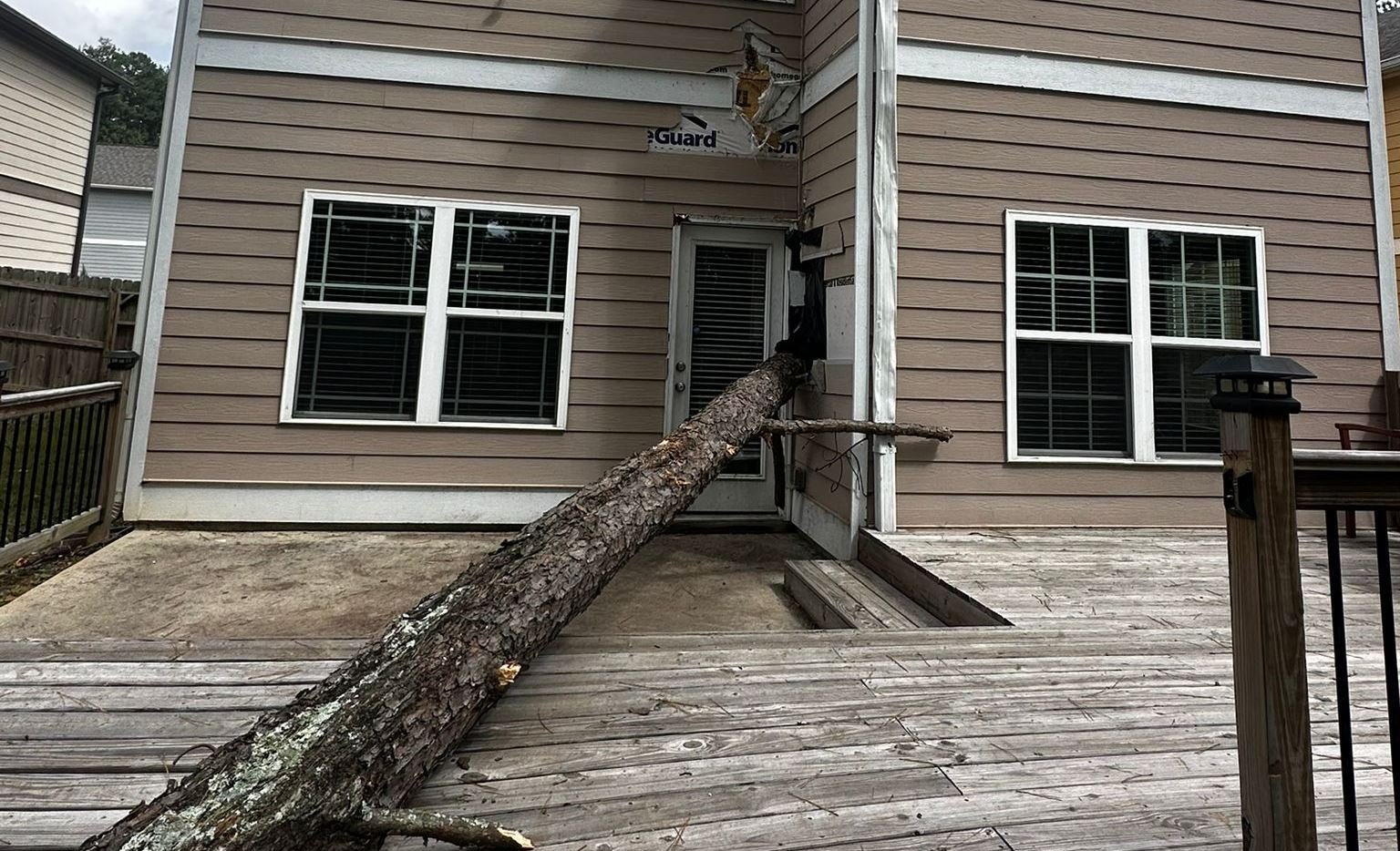
Hurricane season from June through November demands proactive storm preparation, particularly in late summer and early fall when tropical systems most frequently affect Georgia. Advance preparation prevents storm damage and protects property.
January - Late Winter Assessment & Planning
January offers ideal conditions for comprehensive tree assessment before spring growth begins. Deciduous trees without leaves allow clear evaluation of branch structure, while dormancy minimizes stress from pruning activities.
Optimal Activities for January
Structural pruning for deciduous trees proceeds efficiently when branches are visible without leaf cover. Arborists can evaluate branch architecture clearly, identify weak unions and crossing branches, and make informed pruning decisions that improve long-term tree structure.
Oaks, maples, hickories, and other hardwoods benefit from winter structural pruning that shapes growth patterns before spring growth begins. Wounds close quickly when growth resumes in spring, minimizing disease exposure while allowing trees to allocate energy effectively.
Hazard assessment and risk tree removal takes advantage of clear sight lines to identify dangerous trees before spring storms arrive. Trees with structural defects, extensive decay, or dangerous leans become visible when foliage doesn’t obscure problems.
Properties throughout Buckhead, Sandy Springs, Johns Creek, and other established neighborhoods with mature trees benefit from January assessments that identify problems requiring attention before spring weather increases removal difficulty and urgency.
Planning for spring projects including large removals, stump grinding, and landscape modifications begins in January while contractors have greater scheduling flexibility. Early planning ensures projects complete before summer heat and storm season arrive.
What to Avoid in January
Pruning of oaks in areas with oak wilt should be delayed until summer months when fungal mats aren’t active and sap beetles aren’t spreading disease. While January pruning is generally safe in most of Georgia, areas with known oak wilt should observe summer pruning windows.
Planting in frozen ground occasionally occurs during January cold snaps when soil freezes temporarily. Wait for ground to thaw before planting to allow proper root-to-soil contact essential for establishment.
February - Continued Dormant Season Work
February extends the dormant season work period while preparing for spring planting. Trees remain dormant through most of February, though warm spells may trigger early budbreak in some years.
Optimal Activities for February
Final dormant season pruning completes structural work before budbreak begins in earnest. This represents the last opportunity for efficient pruning of deciduous trees before spring growth reduces visibility and increases wound exposure to diseases.
Throughout Alpharetta, Roswell, Brookhaven, and other North Metro communities, February pruning prepares trees for spring growth while addressing hazards identified during winter assessments.
Pre-spring fertilization for trees showing nutrient deficiencies benefits from late winter application that becomes available as root growth resumes. Slow-release fertilizers applied in February support spring growth without promoting excessive vegetative growth later in season.
Specimen trees in Buckhead estates, Johns Creek golf communities, and other premium properties benefit from fertilization programs that maintain vigor and appearance year after year.
Storm preparation begins in February before spring storm season arrives. Removing identified hazards, installing support systems, and addressing structural weaknesses prevents storm damage during March through June when severe weather peaks in Georgia.
Properties throughout Metro Atlanta benefit from proactive storm preparation that protects homes and prevents the disruption and expense of emergency tree removal following severe weather events.
March - Spring Growth Begins
March marks the transition from dormant to active growth season across Georgia. Early spring offers excellent conditions for planting while trees remain in transition between dormancy and active growth.
Optimal Activities for February
Spring planting proceeds throughout March as soil temperatures rise and root growth resumes. Container-grown and bare-root trees establish successfully when planted before hot weather arrives, though container trees can be planted year-round with appropriate care.
Homeowners throughout Suwanee, Peachtree Corners, Dunwoody, and growing North Metro communities often plant trees in March to establish landscapes on new construction or replace trees lost to storms or decline.
Mulch application and renewal proceeds in early spring before temperatures rise. Fresh mulch conserves moisture, moderates soil temperature, and suppresses weeds throughout summer growing season.
Proper mulching technique—avoiding “volcano mulching” against trunks—prevents disease and decay while providing benefits. A 2-4 inch layer extending to drip line protects root zones effectively.
Early season pest monitoring identifies emerging problems before populations explode. Scale insects, borers, and other pests become active as temperatures warm. Early detection allows intervention before significant damage occurs.
Georgia’s climate creates several optimal pruning windows that differ significantly from guidelines written for northern states. For deciduous trees — oaks, maples, hickories, sweetgums — the best window is late January through mid-February, during peak dormancy before budbreak begins. Branches are fully visible without foliage, pruning wounds are minimally exposed to summer diseases, and energy reserves are directed into healing when growth resumes in spring. A secondary pruning window exists in late July through August after the current year’s growth has hardened off and before fall disease activity increases. Flowering trees like dogwoods, redbuds, and ornamental cherries should be pruned immediately after flowering ends in spring — pruning before bloom removes the flower buds that developed the previous fall. Evergreens including hollies, magnolias, and Leyland cypress are best trimmed in late spring after new growth hardens, typically May through early June in the Atlanta metro. The universal exception across all species is dead, broken, or hazardous branches — those should be removed immediately regardless of season throughout all 7 Georgia counties we serve.
Oak wilt is a deadly fungal disease that has been confirmed in Georgia and represents one of the most serious threats to the oak populations throughout Fulton, DeKalb, Gwinnett, and Cobb Counties. The disease spreads through two pathways — root grafts between neighboring trees and sap-feeding beetles that carry fungal spores between trees. The beetle pathway is the critical reason spring pruning is dangerous: nitidulid beetles that carry oak wilt spores are most active from February through June, precisely the period when freshly cut oak wounds produce sap that attracts these insects most strongly. A pruning cut made on a red oak in April in Buckhead or Sandy Springs can attract sap beetles within hours, introducing oak wilt fungus that can kill the tree within weeks and spread through root connections to neighboring oaks. The safest pruning window for oaks in Georgia is July through January, when beetle activity is minimal and fresh wounds are far less attractive to the primary disease vector. If an oak branch must be removed during spring due to storm damage or hazard, immediately paint all cut surfaces with wound sealant to reduce sap flow and beetle attraction — this is the one situation where wound sealant is genuinely recommended by ISA-certified arborists. Call (678) 940-6503 before pruning any oak on your Georgia property to confirm the timing is safe.
Georgia’s extended growing season creates two excellent planting windows, each with distinct advantages. Late October through early March — the fall and winter planting season — is generally considered the optimal window for most tree species in metro Atlanta. During this period, soil temperatures remain warm enough for root establishment even while air temperatures are cool, meaning trees develop extensive root systems before they must support a full leafed-out canopy in summer heat. Trees planted in fall establish significantly larger root systems by the following summer than spring-planted trees of the same species and size, translating directly into better drought tolerance and faster overall growth. March through early April is the secondary planting window, offering good establishment conditions before summer heat arrives — trees planted in this window need consistent watering through their first summer but establish well if irrigation is maintained. May through September planting is possible with container-grown trees but requires dedicated irrigation throughout the first season and carries higher transplant stress risk during Georgia’s intense summer heat. The single most important factor in new tree survival regardless of planting time is the establishment watering program — newly planted trees throughout Fulton, Gwinnett, Cobb, DeKalb, Clayton, Henry, and Rockdale Counties need consistent deep watering for a minimum of one full growing season after planting.
Storm preparation should be completed by late February or early March — before Georgia’s peak tornado and severe thunderstorm season begins in March and well before hurricane season opens June 1. The pre-storm preparation sequence that our ISA-certified arborists recommend for metro Atlanta properties follows a clear priority order. First, schedule a professional hazard assessment to identify trees with structural weaknesses, disease, or failure risk that aren’t visible to untrained observers — this is the most important step and the one most commonly skipped. Second, remove identified dead and hazardous trees proactively — a dead tree within falling distance of your home has zero storm resistance and will fail in the next significant event without exception. Third, schedule preventive crown thinning on large trees near structures — reducing canopy density by 15–20% allows wind to pass through rather than catching the tree like a sail, dramatically reducing uprooting and branch failure risk. Fourth, remove Bradford and Callery pear trees near structures if present — these structurally weak trees split apart in winds as low as 40 mph and should be replaced before storm season rather than after. Fifth, document your current tree conditions with dated photos from multiple angles — this baseline is essential for insurance claims if storm damage occurs later in the season. Call (678) 940-6503 in January or February to schedule your pre-storm property assessment before the spring rush fills our schedule.
Summer pruning in Georgia requires more caution than in northern climates because of the combination of high temperatures, high humidity, and elevated disease pressure that characterizes June through September across metro Atlanta. For most shade trees, minor corrective pruning — removing dead branches, crossing limbs, or low-hanging limbs — is safe year-round including summer, as these are removals that reduce wound surface area rather than creating large new wounds in healthy wood. Major structural pruning creating large wounds on susceptible species should be avoided during Georgia’s peak humidity months of July and August when fungal disease activity is highest, as fresh wounds on stressed trees in humid conditions are prime infection sites. Species-specific rules matter significantly in Georgia’s summer — oaks should avoid major summer pruning before July when oak wilt beetle pressure begins dropping; dogwoods are highly susceptible to dogwood anthracnose and should complete major pruning before June; magnolias tolerate summer pruning reasonably well when cuts are made cleanly. The practical summer pruning guideline for Georgia homeowners: dead branches and active hazards always get removed immediately regardless of season; healthy structural pruning waits for the late July through mid-September window when the growing season is winding down but wounds still have time to begin closing before winter. Call Francisco’s Trees 24/7 at (678) 940-6503 if you’re unsure whether a summer pruning situation can wait or needs immediate attention.
Mulching timing in Georgia follows two strategic windows aligned with seasonal protection goals. The primary mulching window is February through March, applied before soil temperatures rise and the growing season begins — this early spring application conserves soil moisture through the critical summer establishment period, moderates soil temperature during Georgia’s intense summer heat, suppresses weed competition that stresses trees during drought, and feeds soil biology as it breaks down through the growing season. The secondary mulching window is October through November, applied after leaf fall to insulate root zones through winter temperature fluctuations that, while moderate in Georgia, can still stress shallow roots during freeze-thaw cycles. Proper mulching technique is as important as timing for tree health in metro Atlanta. Apply a 2–4 inch layer of organic mulch — shredded hardwood, pine bark, or wood chips — extending from 6 inches away from the trunk out to the tree’s drip line or as far as practical. Never pile mulch against the trunk in the “volcano mulch” pattern extremely common in Georgia neighborhoods — direct trunk contact traps moisture, promotes fungal disease, creates habitat for boring insects, and causes the cambium layer beneath the bark to rot, a condition called collar rot that can girdle and kill mature trees. Flat, even mulch that looks like a donut around the tree rather than a volcano is the correct application. Francisco’s Trees 24/7 can assess your existing mulch application and recommend corrections during our standard property evaluations throughout all 7 Georgia counties.
Georgia’s fall tree care season — October through December — is one of the most productive and often underutilized periods for tree maintenance throughout metro Atlanta. The cooling temperatures, reduced disease pressure, and slowing growth make this an ideal window for several important activities. Fall is the single best time to plant trees in Georgia — soil temperatures remain warm enough for root establishment while cool air reduces transplant stress, giving new trees a significant root system advantage before their first summer. Mature tree structural assessment in October and November, as deciduous trees drop leaves, provides the clearest view of branch architecture for evaluating structural weaknesses, co-dominant stems, and storm damage from the summer season that needs corrective pruning. Stump grinding completes efficiently in fall before winter rains saturate the ground, with debris mixing cleanly into the loosening soil. Soil amendment and aeration in fall allows organic matter to begin breaking down and integrating through winter, improving soil structure by spring. Irrigation system winterization protects drip lines serving newly planted trees before freeze events. What fall is not ideal for in Georgia: major pruning of spring-flowering trees (which sets next year’s buds in fall), fertilization programs that could push new growth before frost, and removal of trees that show fall color without other decline signs — some seasonal leaf changes are normal and not indicators of disease. For a fall property assessment across your Fulton, Gwinnett, Cobb, DeKalb, Clayton, Henry, or Rockdale County property, call (678) 940-6503 before the holiday schedule fills our calendar.
This is one of the most practically important questions for Georgia homeowners, because a significant portion of tree care advice — including content from national gardening publications, HGTV, and even some ISA resources — is written for USDA Hardiness Zones 5 and 6, which describe northern states with cold winters, short growing seasons, and low summer humidity. Metro Atlanta sits in Zones 7b–8a, creating a fundamentally different tree care environment where many national timing recommendations are incorrect or even harmful when applied here. Key differences that matter for Georgia homeowners include: dormancy timing — Georgia trees break dormancy 4–6 weeks earlier than northern trees, meaning “late winter pruning” in the national sense (March) is often too late here when budbreak may begin in February; summer disease pressure is dramatically higher in Georgia’s humid subtropical climate than in the northern and Pacific climates where most fungal disease research originates, requiring more conservative summer pruning timing; fall planting is actively recommended in Georgia as an optimal window whereas it’s discouraged in frost-prone northern regions; winter hardiness concerns that drive much national advice are largely irrelevant in metro Atlanta, where temperatures rarely stay below freezing long enough to affect tree care scheduling; and pest calendars differ substantially, with species like ambrosia beetles, Ips bark beetles, and bagworms operating on timing specific to Georgia’s climate that doesn’t match national management calendars. Francisco’s Trees 24/7 has operated exclusively in Georgia since 2014 — our recommendations are based on direct field experience in Fulton, Gwinnett, Cobb, DeKalb, Clayton, Henry, and Rockdale Counties, not adapted from northern guidelines that don’t apply here.


