

Climate Change and Trees in Fulton County GA: How Georgia's Shifting Weather Is Affecting Your Property's Trees
The trees on your Fulton County property are living through one of the most rapid environmental shifts in Georgia’s modern history. Average temperatures are rising, precipitation patterns are becoming more extreme and unpredictable, drought periods are intensifying, and severe weather events are increasing in destructive potential. For the mature trees that define Fulton County neighborhoods — from the grand oaks of Buckhead estates to the pine canopies of Roswell subdivisions — these changes are creating stress, disease vulnerability, and structural risks that didn’t exist at the same level a generation ago.
Francisco’s Trees 24/7 works with Fulton County properties every day, and what our certified arborists are observing in the field reflects exactly what climate scientists are documenting in the data: Georgia’s trees are under stress, and that stress is translating directly into increased risk of failure for homeowners who aren’t paying attention. This guide explains what’s happening, why it matters for your property, and what you need to do about it.
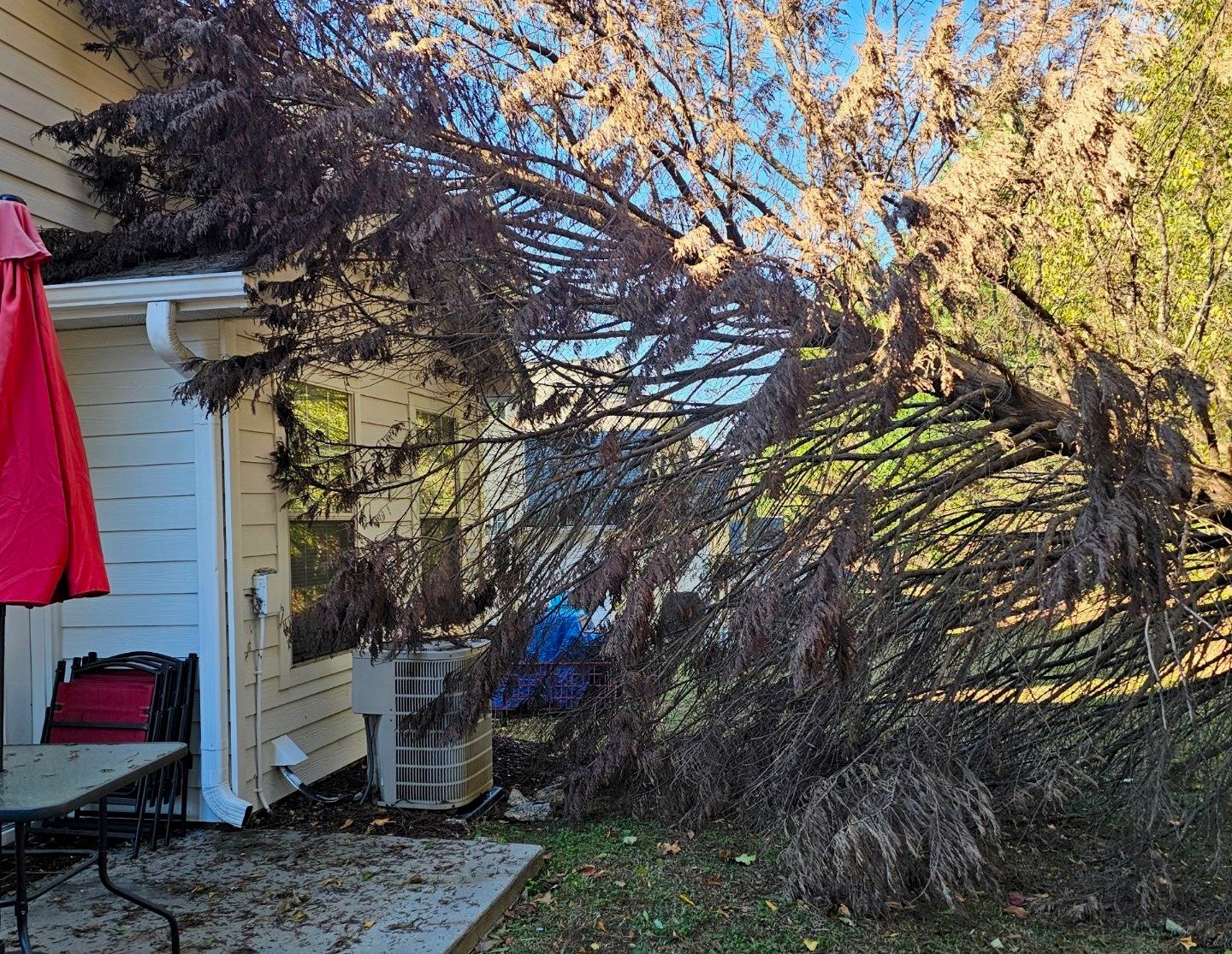
What Georgia's Climate Data Is Showing in 2025 and 2026
Temperature Trends in Fulton County
Average temperatures across the Atlanta metro area and Fulton County have trended upward significantly over the past two decades. This warming manifests in ways that directly affect tree health:
- Extended warm seasons push trees to maintain leaf cover longer, increasing water demand and drought stress
- Warmer winters reduce cold-killing events that previously limited pest populations — insects that historically died back in winter now survive and continue expanding
- Late spring freezes after early warm-weather leafout damage foliage on trees that responded to premature warm signals, creating repeated stress cycles
- Urban heat island effects in developed Fulton County areas amplify regional warming, creating conditions where trees in dense suburban areas experience temperatures significantly higher than surrounding rural areas
Precipitation Extremes Are Replacing Consistent Rainfall
Perhaps the most significant climate trend affecting Fulton County trees is the shift from relatively consistent seasonal rainfall to a pattern of extended dry periods punctuated by intense precipitation events. This ‘feast or famine’ precipitation pattern is particularly harmful to trees because:
- Root systems adapted to consistent moisture experience severe stress during extended droughts
- Rapid soil saturation during intense rain events following dry periods creates root oxygen deprivation — roots suffocate when air spaces fill with water faster than drainage can occur
- Saturated clay soils provide dramatically reduced root anchorage exactly when wind events are most likely to accompany storm systems
- Repeated wet-dry cycles in Fulton County’s red clay soils create physical root damage as soil shrinks and expands
Severe Storm Intensity Is Increasing
While Georgia has always experienced severe thunderstorms, the data from recent years shows that the strongest storms are getting stronger. Straight-line wind events that historically peaked at 50-60 mph now regularly exceed 70-80 mph in Fulton County storm cells. Tornado activity in suburban areas — previously less common — has increased. Rainfall rates during peak events have broken historical records multiple times in the past decade.
For Fulton County’s tree canopy, this means that trees that survived previous storm baselines may no longer be adequate for current storm intensities — particularly trees already stressed by drought, disease, or age.
climate change tree risks Fulton County GA
How Climate Stress Is Showing Up in Fulton County Trees Right Now
Increased Pest Pressure
Warmer winters and stressed trees are combining to create ideal conditions for pest expansion throughout Fulton County. The relationship works in both directions: climate stress weakens trees’ natural defenses against pests, and pests that would have been controlled by historic cold events are now surviving winter and building larger populations.
The Emerald Ash Borer has expanded into Georgia with devastating effect on ash tree populations. The Spotted Lanternfly — an invasive pest first confirmed in Georgia in recent years — feeds on a wide range of trees and represents an emerging threat to Fulton County’s diverse urban forest. Bark beetle populations — already problematic during drought stress — have increased in the absence of consistent winter kill events.
Fungal Disease Expansion
Many fungal pathogens thrive in warm, humid conditions — exactly the conditions that Georgia’s climate shift is producing more consistently. Fulton County is seeing expanded incidence of several fungal diseases that were historically less common:
- Hypoxylon canker on oaks — a fungus that opportunistically infects drought-stressed oaks and causes rapid canopy dieback
- Annosum root rot on pines — a soil-borne fungus that spreads through root contact and kills infected trees within months
- Various Phytophthora species causing root and crown rot in stressed specimens — particularly problematic following cycles of drought and saturation
- Thousand Cankers Disease advancing further into Georgia as temperatures remain warmer longer
Premature Decline in Trees That Should Have Decades Left
Perhaps the most concerning pattern Francisco’s Trees 24/7 arborists are observing across Fulton County is premature structural decline in trees that based on age alone should have decades of safe useful life remaining. Trees in their 40s and 50s — normally approaching their prime in terms of established root systems and structural development — are showing decay, crown dieback, and structural failures typically associated with much older specimens.
The cause is cumulative stress. A drought year weakens defenses. A pest attack takes advantage of that weakness. A subsequent wet year creates fungal conditions. Another drought. Another storm. Each stress event alone might not cause visible decline — but the accumulation over a decade of intensifying climate stress is compressing what would normally be a century of gradual aging into a much shorter timeline.
What Fulton County Homeowners Need to Do in Response to These Changes
Shift from Reactive to Proactive Tree Management
The traditional homeowner approach to tree management — wait until something is visibly wrong, then call for help — is inadequate given current conditions in Fulton County. The time between ‘first visible problem’ and ‘tree failure’ is compressing as climate-stressed trees have fewer reserves to sustain themselves once decline begins.
Proactive management means establishing annual or biennial professional tree health assessments for all significant trees on your Fulton County property. Certified arborists identify and document early stress indicators before visible failure symptoms appear, allowing interventions — soil management, targeted pruning, pest treatment, or planned removal — that happen on your schedule rather than in emergency response to a fallen tree.
Invest in Soil Health to Support Tree Resilience
Soil health improvements directly counteract many of the climate stress factors affecting Fulton County trees. Compacted soils — common throughout developed Fulton County properties — limit root expansion, reduce water infiltration during intense rain events, and accelerate the moisture extremes that stress root systems. Professional soil management options include:
- Vertical mulching: Creating aeration channels in the root zone and filling them with organic material
- Air spading: Using compressed air to excavate soil from root zones without root damage, followed by amendment
- Organic mulching: Applying wood chip mulch in correct ‘donut’ patterns (not volcano) to maintain soil moisture and temperature
- Mycorrhizal inoculation: Introducing beneficial fungi that expand tree root networks and improve drought resilience
Plan for Strategic Tree Replacement
For Fulton County homeowners with aging trees showing climate stress symptoms, strategic replacement planning acknowledges the reality that some trees will not survive current conditions and plans ahead rather than responding to emergencies. This means identifying high-risk trees now, planning their removal during the safest conditions (before storm season, when not frozen), and establishing replacement plantings that incorporate species better suited to Georgia’s evolving climate conditions.
Climate-adapted tree selection for Fulton County in 2026 favors native species with proven drought tolerance: native persimmon, black gum, southern red oak, baldcypress (tolerant of both drought and saturation extremes), American holly, and river birch. These species have evolved within Georgia’s historical climate range and have the genetic resilience to adapt to shifting conditions more effectively than many landscape introductions.
Prioritize High-Risk Positions
Not every climate-stressed tree on your Fulton County property represents equal risk. Prioritize professional assessment and management for trees in high-consequence positions: overhanging structures, near where children play, adjacent to driveways and frequently used outdoor areas, and along property lines where failure could damage neighbors’ property.
A tree in an open area of your yard that is declining due to climate stress poses very different risk than a similarly stressed tree overhanging your master bedroom. Risk prioritization allows Fulton County homeowners to direct available resources toward the trees that matter most for property protection and family safety.
Francisco's Trees 24/7: Climate-Informed Tree Care Throughout Fulton County
Francisco’s Trees 24/7 provides tree health assessment, professional pruning, hazard tree removal, and 24/7 emergency tree service throughout Fulton County, Georgia. Our certified arborists understand the specific climate stress patterns affecting Fulton County trees and provide assessments and recommendations grounded in current field observations across Atlanta, Sandy Springs, Alpharetta, Roswell, Johns Creek, Milton, and all other communities within Fulton County.
Climate change is not an abstract future concern for Fulton County trees — it’s a present reality that is actively increasing tree-related property risk throughout the county. Homeowners who understand these dynamics and take proactive steps to assess and manage their trees are dramatically better positioned to protect their properties and avoid the emergency costs and property damage that come with reactive, after-the-fact responses.
Fulton County Service Areas: Emergency Tree Response Throughout the County
⚠️ Protect Your Fulton County Property — Schedule Your Tree Health Assessment Today — (678) 940-6503 | franciscotrees911.com
The climate shifts affecting Fulton County are not abstract future projections — they are producing measurable, observable changes in tree behavior and failure rates that our certified arborists document across Atlanta, Sandy Springs, Alpharetta, Roswell, Johns Creek, and Milton every season. Three interconnected trends are driving increased tree risk simultaneously. First, temperature intensification: average temperatures across the Atlanta metro have trended meaningfully upward over two decades, extending warm seasons that increase tree water demand, reducing the cold periods that historically controlled pest populations, and amplifying the urban heat island effect in Fulton County’s developed areas where trees already experience greater heat stress than surrounding rural zones. Second, precipitation extremes: Fulton County is shifting from relatively consistent seasonal rainfall to a pattern of extended drought periods followed by intense rainfall events — a cycle that is particularly damaging because the same clay soils that crack and lose structure during drought then saturate rapidly during intense rain, stripping root anchorage from trees that were already drought-stressed. Third, storm intensity escalation: straight-line wind events that historically peaked at 50–60 mph in Fulton County now regularly exceed 70–80 mph in the strongest storm cells, meaning trees that survived previous storm baselines may no longer be structurally adequate for current storm intensities — especially trees already compromised by the first two stress factors. The cumulative effect is what Francisco’s Trees 24/7 arborists observe most consistently across Fulton County: trees in their 40s and 50s showing structural decline and failure patterns historically associated with trees twice their age, driven by a decade of intensifying climate stress compressing a century of normal aging into a much shorter timeline.
Not all tree species respond equally to Fulton County’s shifting climate conditions, and understanding which trees on your property face elevated risk — and which offer better long-term stability — is one of the most practical applications of climate-informed tree care. Most vulnerable in current Fulton County conditions are loblolly pines, which develop shallow root systems in the clay soils common throughout the county and face compounded stress from bark beetle populations that are expanding due to warmer winters; water oaks, which already have naturally shorter lifespans and develop rapid internal decay that climate stress accelerates significantly; Bradford and Callery pears, whose structural weakness is amplified by the more intense storm winds Fulton County now regularly experiences; and many non-native ornamental species planted throughout 1970s–1990s Fulton County developments that were selected for appearance rather than climate resilience and are showing increasing heat and drought stress. Most resilient in Georgia’s evolving climate are native species with deep evolutionary adaptation to the region’s conditions: southern red oak and overcup oak tolerate both drought and wet periods better than water oaks; baldcypress is uniquely tolerant of the saturation-to-drought extremes that Fulton County’s feast-or-famine precipitation pattern creates; native persimmon and black gum demonstrate strong drought tolerance while maintaining structural integrity under storm stress; American holly handles Fulton County’s temperature fluctuations and soil moisture extremes well; and river birch performs well in the wet-soil areas where many landscape trees struggle. For Fulton County homeowners planning new plantings or replacement trees, Francisco’s Trees 24/7 certified arborists can recommend species selection tailored to your specific property conditions — call (678) 940-6503 to schedule a consultation.
The wet-dry cycles that Fulton County’s red clay soil undergoes during Georgia’s increasingly extreme precipitation patterns create a specific root damage mechanism that directly increases storm vulnerability — and understanding this cycle explains why trees that have survived decades of storms can suddenly fail during weather events no more severe than those they previously weathered. During extended drought periods, Fulton County’s clay soils contract significantly, creating cracks and voids throughout the root zone. This soil shrinkage physically separates the soil from root surfaces, breaking the fine root hairs that conduct water and nutrient absorption and sometimes mechanically tearing lateral roots where the soil pulls away. Roots themselves experience desiccation stress during extended drought, reducing their cellular integrity and making them more brittle. When intense rainfall follows drought — the increasingly common pattern in Fulton County — water rushes into the existing cracks and saturates the clay soil faster than drainage or absorption can accommodate. Saturated clay undergoes thixotropic transition, losing most of its shear strength and shifting from firm root-gripping material to a near-liquid medium that provides almost no lateral resistance. The root system that was already weakened by drought shrinkage now has almost no anchorage in the saturated soil. If a wind event arrives during or shortly after this saturation period — which happens with almost every significant Georgia thunderstorm system — even moderate winds can overwhelm a root system that previously held the tree stable in higher winds during dry conditions. This exact failure sequence explains the pattern Francisco’s Trees 24/7 observes repeatedly across Fulton County: trees failing in storms that appear no stronger than storms they survived in previous years, in soil that was subjected to an extended dry period before the rain arrived. Annual soil health management — aeration, organic matter incorporation, proper mulching — directly counteracts this cycle and meaningfully improves root zone resilience.
Georgia’s warming winters are producing a significant and measurable shift in pest population dynamics throughout Fulton County that directly increases tree mortality risk — and the mechanism operates through a straightforward biological principle that is now playing out at landscape scale. Many of the most destructive tree pests in Georgia historically had their population cycles regulated by winter cold events that killed significant percentages of overwintering adults, eggs, and larvae. Extended periods below 15–20°F in winter served as a natural population reset that limited how large bark beetle, ambrosia beetle, and various other destructive pest populations could become. As Fulton County’s winters warm and extended cold periods become less frequent and less severe, these population resets are no longer occurring reliably — pest populations that historically crashed in winter are now surviving in larger numbers and resuming reproduction earlier in spring, building to population levels that cause significantly more tree mortality during subsequent growing seasons than historical patterns would have predicted. The Emerald Ash Borer, which has devastated ash tree populations across the eastern United States and is now confirmed throughout Georgia, represents the most dramatic example of what happens when a highly destructive invasive pest encounters a landscape with no natural predators and increasingly favorable overwintering conditions. The Southern Pine Beetle — already the most destructive insect pest in Georgia’s pine forests — is benefiting from both warmer winters and the increased drought-stressed pine populations that are more susceptible to attack. The Spotted Lanternfly, confirmed in Georgia in recent years, feeds on dozens of tree species and is expanding its range in the absence of the cold events that limited its early spread. For Fulton County homeowners, the practical implication is that annual professional tree assessments specifically including pest monitoring have become more important than ever — early detection of bark beetle activity, Emerald Ash Borer signs, or other pest pressure allows responses that can protect adjacent healthy trees even when an already-infested tree cannot be saved.
Hypoxylon canker — caused by the opportunistic fungal pathogen Biscogniauxia atropunctata — has become one of the most frequently observed and most rapidly destructive diseases affecting oak trees throughout Fulton County in recent years, and its increasing prevalence is directly connected to the climate stress patterns the article describes. Understanding why this disease is expanding helps Fulton County homeowners recognize the risk it represents for oaks on their properties. Hypoxylon is what arborists classify as an opportunistic secondary pathogen — it is present in the environment at low levels throughout Georgia’s forests and urban canopies, but it only successfully infects trees whose immune systems and defensive chemistry have been compromised by primary stress. A completely healthy, well-watered, unstressed oak successfully prevents Hypoxylon from establishing infection through its natural resin-based defenses. However, an oak that has experienced one or more seasons of significant drought stress — exactly the condition that Fulton County’s increasingly extreme precipitation patterns are producing more frequently and more severely — has depleted its defensive resin reserves and cannot mount effective resistance against Hypoxylon spore germination. Once established in drought-stressed oak tissue, Hypoxylon spreads rapidly through the sapwood, killing infected bark in expanding patches called stromata — grayish-silver areas visible on the trunk and major branches where the outer bark has sloughed away. The disease can spread from initial infection to complete canopy death in a single growing season in severely stressed red oaks. There is no curative treatment for established Hypoxylon canker — management focuses entirely on keeping trees out of the drought stress state that allows the fungus to establish in the first place, and on identifying infected trees early enough to remove them safely before structural compromise creates emergency hazard conditions. Francisco’s Trees 24/7 certified arborists specifically assess for Hypoxylon indicators during tree health evaluations throughout Fulton County — call (678) 940-6503 to schedule a professional assessment of your oaks before summer drought season.
The traditional reactive approach to tree management — ignore trees until something is visibly wrong, then call an emergency service — was always suboptimal but is becoming genuinely inadequate as Fulton County’s climate stress conditions accelerate the timeline from early decline to structural failure. The professional shift Francisco’s Trees 24/7 recommends to Fulton County homeowners is from reactive crisis management to proactive health monitoring with documented baselines. In practical terms, this means establishing annual or biennial professional tree health assessments for all significant trees on your property — not just when you notice something wrong. Certified arborist assessments conducted consistently over time create documented health baselines that make early change detection possible, identifying stress indicators, early disease signs, and structural concerns when management options are still available rather than when emergency removal is the only answer. It also means investing in soil health as a primary tree resilience strategy — the root zone soil conditions that support drought tolerance, disease resistance, and storm anchoring are improvable through professional management including air spading, vertical mulching, organic matter incorporation, and mycorrhizal inoculation, and these investments directly counteract several of the climate stress mechanisms affecting Fulton County trees. Strategic species selection for new plantings and tree replacement is another critical shift — choosing climate-adapted native species with proven performance in Georgia’s evolving conditions rather than replicating the landscape plantings from decades ago that are now struggling under current conditions. Finally, risk prioritization based on location and consequence rather than treating all trees equally — directing the most intensive monitoring and earliest intervention toward trees in high-consequence positions overhanging structures, play areas, and frequently occupied outdoor spaces throughout your Fulton County property. Call Francisco’s Trees 24/7 at (678) 940-6503 to discuss establishing a proactive tree management plan for your Fulton County property.
The urban heat island effect in Fulton County’s developed areas creates a tree stress environment that is meaningfully more intense than what regional climate data alone would suggest, and this local amplification of broader warming trends is one of the reasons Fulton County trees are showing stress symptoms at rates and in species that might not be expected based on Georgia-wide climate trends. The urban heat island effect occurs when the combination of impervious surfaces — roads, parking lots, rooftops, driveways — dark-colored materials that absorb and retain solar radiation, reduced vegetation cover that would otherwise provide cooling through transpiration, and waste heat from vehicles, HVAC systems, and human activity creates localized temperatures significantly higher than surrounding rural or less-developed areas. In Atlanta’s urban core and throughout dense Fulton County communities including Buckhead, Sandy Springs, and Midtown Atlanta, summer temperatures can run 5–10°F higher than surrounding areas on hot days — and these are precisely the days when trees are already under maximum heat and drought stress. For urban Fulton County trees, this means drought stress periods are more intense and occur earlier in the season than regional averages would suggest, heat stress reaches tree-damaging thresholds more frequently and for longer duration, soil moisture evaporation from root zones is accelerated by higher surface temperatures, and the nighttime temperature recovery that allows trees to restore their water balance is reduced as urban surfaces release stored heat overnight. Trees in suburban Fulton County communities — Alpharetta, Roswell, Johns Creek, Milton — experience less intense heat island effects but still meaningfully elevated temperatures compared to rural Georgia. The management responses that most directly address urban heat island stress in Fulton County trees are maximizing root zone organic mulch coverage to moderate soil temperature extremes, soil aeration to maintain water infiltration capacity under heat-compacted soil conditions, and irrigation management during drought periods specifically calibrated to the local heat island intensity rather than regional averages.
Francisco’s Trees 24/7 has operated exclusively in the metro Atlanta and Fulton County market since 2014, and our certified arborists’ field observations across thousands of Fulton County property assessments over more than a decade provide a ground-level perspective on how climate stress is manifesting in local tree populations that complements what climate scientists are documenting in the data. Our assessments for Fulton County properties explicitly incorporate climate-informed evaluation in several specific ways. During tree health assessments, our arborists evaluate stress indicators — canopy density changes, bark condition, root zone health, and early disease signs — in the context of the recent climate history of your specific property location, including drought periods, recent precipitation intensity, and pest pressure that has been active in your specific Fulton County neighborhood. For removal decisions, we assess whether observed decline is primarily age-related, climate-stress-accelerated, or disease-driven — because the answer affects both the urgency of removal and the recommendations for replacement species selection. For replacement planting recommendations, we specifically recommend climate-adapted native species selections matched to your property’s specific soil, drainage, and exposure conditions rather than generic recommendations that don’t account for how Fulton County’s local climate conditions are shifting. For soil health management, we assess root zone conditions specifically for the compaction, drainage, and organic matter depletion patterns that Fulton County’s clay soils develop under climate stress cycling, and recommend targeted treatments that address the specific limiting factors on your property. Throughout all of Fulton County — Atlanta, Sandy Springs, Alpharetta, Roswell, Johns Creek, Milton, and surrounding communities — Francisco’s Trees 24/7 provides 24/7 emergency response and proactive tree health management grounded in direct field experience with how Georgia’s changing climate is affecting your specific trees. Call (678) 940-6503 to schedule a climate-informed tree health assessment for your Fulton County property.


