

Signs a Tree Needs to Be Removed: A Georgia Homeowner's Guide
The signs a tree needs to be removed are not always as obvious as a fallen trunk or a completely dead canopy. A mature tree can continue producing leaves while decay, root damage, or a weak branch connection develops elsewhere. The practical goal is to notice meaningful changes early, keep people away from a possible drop zone, and obtain an on-site assessment before deciding whether pruning, monitoring, support, or removal is appropriate.
For homeowners in Metro Atlanta, trees often stand close to roofs, driveways, fences, and utility lines. The condition of the tree matters, but so does what could be struck. A defect over an open area may require a different response from the same defect beside a bedroom, vehicle, or walkway.
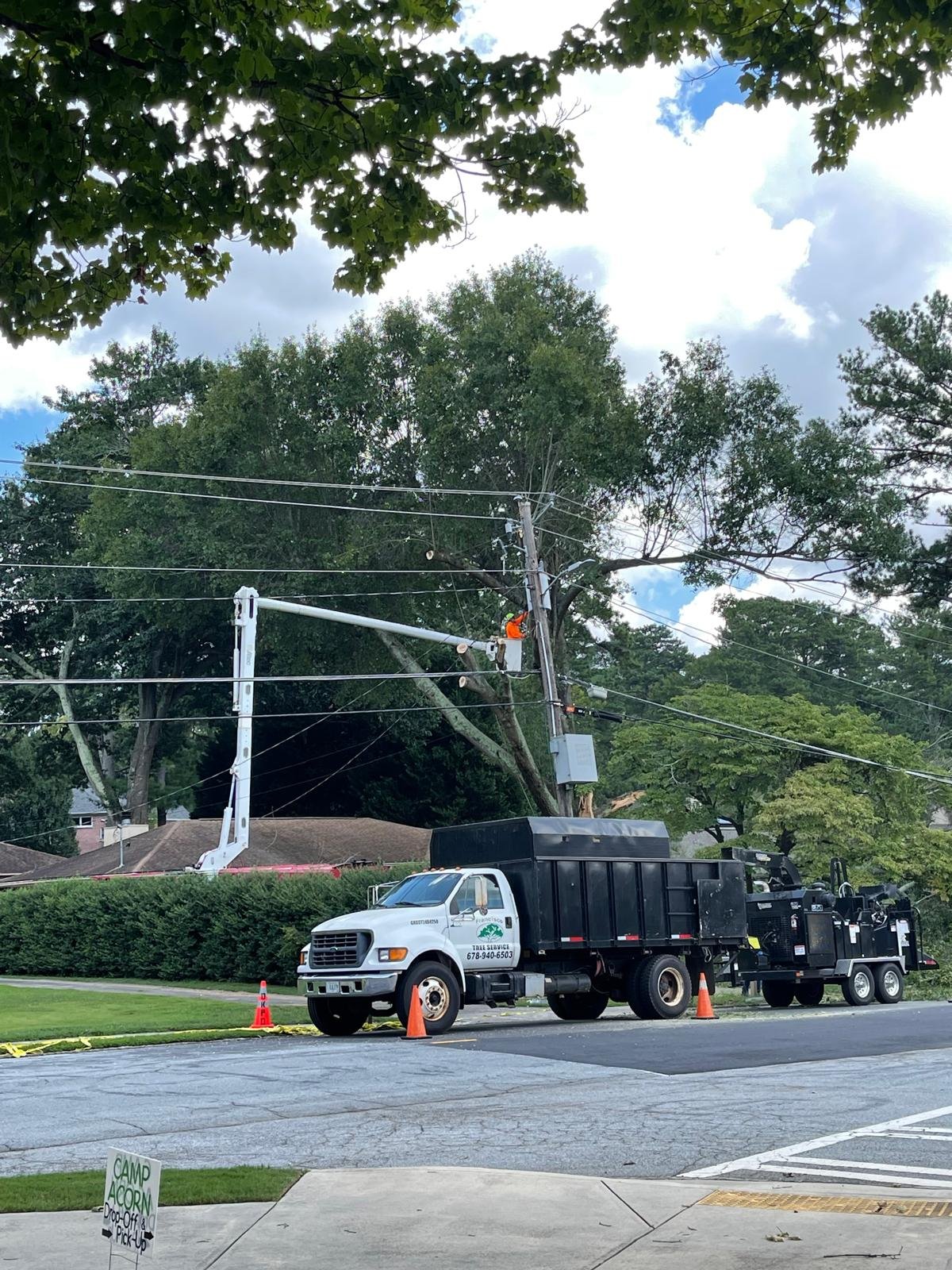
What visible changes deserve a closer look?
One symptom rarely settles the question. The signs a tree needs to be removed become more concerning when several appear together, worsen over time, or affect the trunk, main branches, or root system. Recent storms, excavation, trenching, soil changes, and construction can also explain a sudden change.
Large dead branches deserve attention because they can detach even when the rest of the canopy remains green. A sudden lean, newly lifted soil, or cracking around the root plate may suggest that anchoring has changed. Fresh trunk cracks, splitting where major stems meet, and cavities that appear to be expanding should also be evaluated. Mushrooms or fungal structures around the base can be associated with decay, although their presence alone does not prove that removal is necessary.
Sparse leaves, early color change, peeling bark, repeated branch dieback, and more dead twigs can point to decline. They may also result from drought, pests, disease, or root disturbance and do not replace an inspection.
The International Society of Arboriculture explains that removal may be considered when a tree is dead or dying, presents an unacceptable risk, creates an obstruction that pruning cannot correct, crowds more desirable trees, or conflicts with construction. Its consumer guidance on when professional tree care may be needed also notes that storm-damaged tree work can be dangerous.
Seven signs a tree needs to be removed or professionally assessed
The first warning is a growing lean, especially when it is new or accompanied by cracked soil or exposed roots. Many trees naturally lean, so a change in angle matters more than appearance alone.
The second warning is extensive dead wood. One dead limb may be pruned, while multiple large dead branches or continued dieback can indicate a broader problem.
The third warning is a major crack or split. Pay attention to cracks that extend along the trunk, open after wind, or occur where two large stems join. Do not stand beneath a split section to inspect it.
The fourth warning is root damage. Construction, trenching, vehicle traffic, erosion, and root cutting can affect stability or health. Much of the root system is underground, so a quick visual check has limits.
The fifth warning is advanced decay in a structurally important area. A cavity, soft wood, loose bark, or fungal growth near the root flare may justify closer evaluation. Decay does not automatically mean the entire tree must be removed; its location and extent influence the available options.
The sixth warning is repeated storm damage. Major limb loss, new cracks, or hanging branches can change the tree structurally. Keep clear and avoid pulling branches down yourself.
The seventh warning is an unavoidable conflict with a structure, access route, or utility. Pruning can sometimes create clearance, but repeated severe cutting may not be a sound long-term solution. Work near energized lines should be left to the utility or qualified line-clearance professionals.
These signs a tree needs to be removed are reasons to request a careful evaluation, not a remote diagnosis. The decision should account for the tree’s condition, the likelihood of failure, the potential target, and whether a practical treatment can reduce the concern.
When removal may be appropriate and when another option may work
Removal may be appropriate when the tree is dead, its main structure is badly compromised, the root system has lost meaningful support, or the risk cannot be reduced to an acceptable level through reasonable care. It may also be considered when a tree cannot coexist with necessary construction or access and selective pruning would leave it unstable or severely damaged.
Pruning may be enough when the concern is limited to dead, broken, crossing, or poorly attached branches and the remaining tree is suitable to retain. Monitoring can make sense when a condition is stable and the consequences of failure are low. In some cases, support systems or changes around the root zone may be discussed by a qualified professional. Each option has maintenance requirements and limitations.
Georgia homeowners should also consider property boundaries before authorizing work. The University of Georgia Cooperative Extension advises identifying ownership, communicating with neighbors about overhanging or shared trees, and obtaining a professional opinion before work begins. Its guidance on tree ownership and responsibility should be set to nofollow in Elementor. It is general educational information, not legal advice for a specific dispute.
Learning the signs a tree needs to be removed can help you describe the concern clearly when requesting service. It does not mean that every cracked, leaning, or declining tree must come down. An on-site review is needed to understand the whole tree and the area around it.
What to do when you notice a warning sign
Keep people, pets, and vehicles away from a hanging branch, split stem, or visibly shifting tree. If a tree touches a power line, stay back and contact the utility. If someone is in immediate danger, call 911.
From a safe position, note when you first saw the change and whether it followed a storm, construction, excavation, or recent pruning. Take wide photographs that show the whole tree and its distance from nearby structures, followed by closer photographs only when they can be taken without entering a potential drop zone.
When you call a tree service, explain the location, visible change, nearby targets, and whether utilities are involved. Ask what the assessment will cover, what options exist besides removal, how the work area will be protected, and what cleanup is included in the written scope.
Francisco’s Trees serves Fulton, Gwinnett, Cobb, DeKalb, Clayton, Henry, and Rockdale Counties. Review the company’s tree removal and related services] or call (678) 940-6503 for a FREE estimate on non-emergency work. If the condition appears urgent, describe exactly what is happening when you call.
Recognizing the signs a tree needs to be removed early gives you time to compare options. The final recommendation should reflect the full condition of the tree and property, not one photograph or symptom.
FAQs — Signs a Tree Needs to Be Removed in Georgia
The most common signs a tree needs to be removed include extensive dead wood, a worsening lean with soil movement, major trunk splits, serious root damage, advanced decay in a critical area, or repeated structural failure. One symptom does not automatically require removal.
No. Some trees develop a stable lean as they grow. A new or increasing lean, especially with cracked soil, lifted roots, or recent storm damage, deserves prompt professional attention.
Pruning can address some branch-level concerns, but it cannot restore severely decayed wood or a failed root system. When reviewing the signs a tree needs to be removed, ask whether pruning would reduce the concern without creating additional stress.
Contact the utility and follow its instructions. Do not touch the tree, branch, tools, or equipment near an energized line, and do not attempt the work yourself.
Call (678) 940-6503 and describe the tree, the visible concern, the county, nearby structures, and whether the situation is urgent. FREE estimates are available for non-emergency services.


