

Leaning tree dangers Dunwoody GA: The Emergency Every Homeowner Needs to Recognize
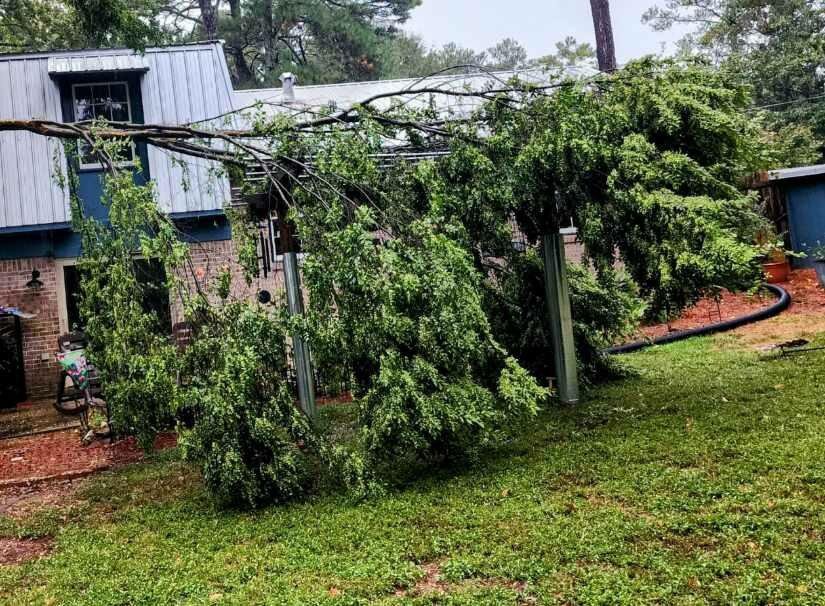
Your Dunwoody home sits among some of metro Atlanta’s most beautiful mature tree canopies. But that picturesque tree that’s developed a noticeable lean? It’s transformed from a landscape asset into a potentially lethal hazard that could destroy your home, injure your family, or kill someone in your yard.
Francisco’s Trees 24/7 responds to leaning tree emergencies throughout Dunwoody and North DeKalb County where the difference between proactive removal and catastrophic disaster is often measured in hours, not days. We’ve seen firsthand what happens when homeowners underestimate the danger of leaning trees—and we’ve prevented countless disasters by removing dangerous trees before they fall.
This comprehensive emergency guide explains why Dunwoody’s specific conditions create elevated leaning tree risks, how to recognize the critical warning signs that demand immediate action, and why waiting even one more day could be the decision that costs you everything.
Why Dunwoody Faces Exceptional Leaning Tree Risks
Dunwoody’s unique characteristics create a perfect storm of conditions that make leaning trees particularly dangerous:
Dunwoody’s Urban Forest Maturity
Established development dating from the 1960s-1980s means trees throughout Dunwoody are reaching ages where structural failures become common.
Many Dunwoody neighborhoods feature:
- Trees planted 40-60 years ago during original development
- Specimen trees preserved during construction now exceeding 80-100 years
- Aging infrastructure (sidewalks, utilities, roads) that damaged roots during installation decades ago
- Development-era grading and soil changes that compromised long-term tree stability
Trees in this age range face:
- Root system deterioration and decay
- Accumulated storm damage from decades of severe weather
- Disease progression that weakens structural integrity
- Reduced vigor making them unable to resist stress
Throughout Dunwoody neighborhoods from Georgetown to Dunwoody Village, from Pernoshal Court to Dunwoody Club, mature trees define community character—but many have reached the point where beauty masks dangerous structural decline.
North DeKalb County Soil Challenges
Georgia red clay throughout Dunwoody creates specific tree stability challenges:
Clay soil characteristics affecting tree stability:
- Extreme hardness when dry prevents root expansion
- Becomes slippery and provides minimal support when saturated
- Shrinks during drought creating gaps around root systems
- Swells when wet putting pressure on roots and hardscape
- Poor drainage in some areas creates prolonged saturation
The cycle of extreme dry and extreme wet conditions stresses trees continuously. Roots adapted to dry conditions may rot during wet periods. Trees stressed by drought lack vigor to resist storm damage.
Shallow soil over bedrock in some Dunwoody areas limits root depth, forcing trees to develop shallow spreading root systems that provide less stability than deep roots. Trees with restricted root zones are dramatically more vulnerable to leaning and failure.
Development Density and Property Constraints
Dunwoody’s suburban density means homes sit closer together than rural areas but farther apart than urban Atlanta. This creates a zone where:
Trees have space to grow large canopies creating massive wind resistance Properties are close enough that falling trees damage multiple homes Lot sizes provide insufficient clearance for large trees to fall safely Underground utilities, septic systems, and irrigation constrain root development
Extensive hardscaping throughout Dunwoody properties—driveways, patios, pools, retaining walls—limits where roots can grow and creates obstacles that must be protected during emergency removals.
Severe Weather Exposure
Dunwoody’s location in North DeKalb County places it directly in paths of:
Severe thunderstorm corridors that regularly produce damaging straight-line winds exceeding 60 mph. These storms occur multiple times each spring and summer.
Occasional tornadoes that have touched down in or near Dunwoody multiple times in recent decades. The March 2008 tornado that struck downtown Atlanta affected surrounding areas including parts of North DeKalb.
Tropical system remnants that bring heavy rain, saturated soils, and high winds even though Dunwoody sits 250 miles from the coast. Tropical moisture combines with local thunderstorms to create extreme conditions.
Ice storms during winter months load branches with heavy ice, creating enormous leverage forces on already-stressed trees. The combination of ice weight and compromised stability makes failure during ice events particularly common.
The Timeline of Tree Failure - How Quickly Leans Become Disasters
Understanding failure progression helps homeowners recognize when “monitoring” becomes “emergency”:
Acute Failure – Hours to Days
Some leaning tree situations progress from first visible lean to complete failure in hours:
Storm-induced root failures during severe weather can create situations where trees lean visibly during or immediately after storms and fail completely during the next weather event—sometimes within 24-48 hours.
In saturated clay soils common throughout Dunwoody, root systems can lose anchorage rapidly once failure begins. A tree showing minor lean Monday morning may be on your roof Tuesday night.
Signs of acute failure:
- Lean developed or increased dramatically during single storm event
- Visible soil heaving or lifting around trunk base
- Soil cracking in radiating patterns from trunk
- Tree rocks or moves when pushed
- Fresh cracking sounds during wind events
Response required: Same-day emergency assessment and typically immediate removal. These situations represent imminent failures where hours matter.
Progressive Failure – Days to Weeks
Other situations develop over days or weeks:
Post-construction root damage may not manifest immediately but creates progressive failures as damaged roots decay and remaining roots cannot support trees alone.
Throughout Dunwoody where renovations, additions, and landscape projects are common, construction damage often creates delayed leaning tree emergencies weeks or months after work completes.
Signs of progressive failure:
- Lean increasing visibly over days or weeks
- Gradual soil disruption becoming more pronounced
- Declining tree health accompanying structural instability
- Lean worsening after each rain event or wind storm
Response required: Assessment within 24-48 hours and typically removal within days. While not immediately catastrophic, these trees are actively failing and will eventually fall.
Chronic Lean – The Deceptive Danger
The most dangerous scenarios are chronic leans that appear stable:
Trees leaning for months or years create false confidence. Homeowners think “it’s been leaning for six months and hasn’t fallen, so it must be okay.” This is dangerously wrong.
Chronic leans represent:
- Slow root system deterioration in progress
- Accumulated fatigue in wood fibers under stress
- Progressive decay advancing through root collar and lower trunk
- Approaching but not yet reaching final failure point
The transition from “stable chronic lean” to “catastrophic failure” is unpredictable and often occurs during weather events only slightly more severe than previous storms the tree survived.
Response required: Professional assessment to determine stability and establish monitoring schedule or removal timeline. Even “stable” chronic leans eventually fail—the question is when, not if.
Why Waiting is Always Wrong
Every day a leaning tree stands increases risk:
- Root deterioration continues
- Wood stress accumulates damage
- Soil disruption progresses
- Next storm could be the one that causes failure
- Liability increases if you’ve identified the hazard but delayed action
Professional assessment provides facts about specific timelines, but general rule is: leaning trees that developed after storms or during wet periods should be removed within days, not weeks or months.
Species-Specific Failure Patterns in Dunwoody
Common tree species in Dunwoody show characteristic leaning and failure behaviors:
Loblolly and White Pines – Rapid Catastrophic Failure
Pine trees dominate many Dunwoody properties, particularly in older neighborhoods where pines provided quick screening during development.
Pine vulnerability factors:
- Shallow spreading root systems provide minimal stability compared to deep-rooted hardwoods
- Brittle wood that fails suddenly rather than bending gradually
- Top-heavy growth pattern with most canopy weight in upper portions
- Rapid growth producing weak wood structure
- Pine bark beetle attacks weakening trees before visible decline
Critical danger with leaning pines: Once pines begin leaning, failure often progresses within days. The combination of shallow roots and brittle wood means pines don’t “gradually” fail—they catastrophically collapse.
Throughout Dunwoody, pine emergencies require same-day assessment and typically immediate removal. Don’t wait to see if leaning pines stabilize—they won’t.
Water Oaks and Willow Oaks – Decay-Related Failures
Oak species particularly water oaks and willow oaks common in Dunwoody yards, often lean due to internal decay:
Oak failure characteristics:
- Root collar decay progressing for years before visible symptoms
- Hollow trunks maintaining appearance while losing structural strength
- Sudden failures without warning when remaining wood shell breaks
- Disease susceptibility (oak wilt, root rots) compromising stability
- Long lifespan meaning many Dunwoody oaks are approaching structural limits
Warning signs in leaning oaks:
- Fungal fruiting bodies (mushrooms, conks) at trunk base
- Soft or spongy bark when pressed
- Cavities or hollow areas visible in trunk
- Declining canopy health combined with lean
- Previous storm damage or wounds showing decay
Leaning oaks require professional assessment including:
- Resistograph testing to measure internal decay extent
- Root collar excavation to examine buried trunk base
- Sonic tomography for internal condition imaging
Bradford Pears – Structural Failure Machines
Bradford pears planted extensively in Dunwoody from 1970s-1990s are reaching ages where catastrophic failures become epidemic:
Bradford pear problems:
- Inherently weak branch unions that split under stress
- Multiple co-dominant stems without strong attachments
- Fast growth producing weak, brittle wood
- Top-heavy canopy creating enormous wind resistance
- Shallow root systems relative to canopy size
Bradford pear emergency characteristics:
- Often fail during storms even without visible prior lean
- When they develop leans, failure follows rapidly (hours to days)
- Frequently split apart rather than falling as single units
- Create multiple impact zones as sections fall in different directions
Any Bradford pear showing lean should be assessed same day and typically requires immediate removal. These trees are ticking time bombs—lean is the final warning before catastrophic failure.
Sweetgums and Tulip Poplars – Wet Soil Failures
Sweetgum and tulip poplar trees in poorly-drained Dunwoody locations commonly develop leans during wet periods:
Characteristics creating failure risk:
- Shallow, aggressive root systems
- Intolerance of prolonged soil saturation
- Root rot development in wet conditions
- Fast growth creating top-heavy structures
- Brittle wood that fails suddenly
These species often lean after:
- Extended spring rain periods
- Tropical system remnants bringing multi-day rain
- Winter/spring when ground remains saturated for weeks
- Drainage changes from nearby construction or landscaping
Emergency indicators: Sweetgums or poplars in wet areas showing any lean should be assessed within 24-48 hours. Root rot can progress rapidly in saturated conditions.
Critical Warning Signs Demanding Immediate Action in Dunwoody
Every Dunwoody homeowner should recognize these emergency indicators:
Visual Indicators Requiring Same-Day Response
Soil heaving or mounding on one side of the trunk (typically opposite the lean direction) indicates the root ball is literally pulling up from the ground.
In Dunwoody’s clay soils, soil heaving creates distinctive patterns:
- Lifted, cracked soil surface
- Mounded areas around trunk base
- Soil “tenting” as root plate pulls upward
- Visible gaps between roots and soil
Walk completely around the base of any leaning tree looking for these signs. Their presence means failure is imminent—possibly within hours of next wind event.
Fresh cracks in trunk particularly at ground level or at points where lean is most pronounced indicate wood is failing under stress.
Cracks to watch for:
- Vertical splits in lower trunk
- Horizontal cracks at root collar
- Separation along stress lines
- Fresh wood exposure (light colored, not weathered)
Fresh cracks mean internal wood fibers are tearing apart. This is active failure in progress requiring immediate professional response.
Exposed roots that were underground yesterday but are visible today show the tree is actively moving.
Normal trees have root flares at ground level but main structural roots remain buried. Seeing roots pulled up from soil indicates:
- Progressive root system failure
- Imminent complete failure
- Emergency requiring same-day removal
Sound and Movement Indicators
Cracking or popping sounds during wind events indicate wood fibers breaking or roots tearing.
If you hear your leaning tree making sounds during storms:
- This is active failure occurring
- Complete collapse could happen during current storm or next event
- Emergency assessment needed immediately when weather clears
Movement when pushed against the trunk indicates root system has failed to point where tree is barely anchored.
Test trees you suspect are unstable:
- Push firmly against trunk at chest height
- Stable trees should not rock or move
- Any movement indicates severe root failure
- Movement plus lean equals emergency requiring immediate removal
Swaying excessively during moderate winds compared to nearby trees indicates compromised stability.
All trees sway in wind, but leaning trees with failing root systems move dramatically more than stable trees in same wind conditions.
Soil and Weather Context
Lean developing or worsening during/after rain indicates saturated soil is allowing root movement.
Dunwoody’s clay soils when saturated provide minimal root support. Trees that appear stable in dry weather can lean dramatically when clay becomes slippery mud.
Timing correlation with storms where trees show increased lean after each weather event indicates progressive failure.
Document lean angles after storms:
- Photograph trees from same position after each storm
- Note if lean appears worse
- Progressive worsening means failure is approaching
- Each storm brings tree closer to final collapse
The Dunwoody Emergency Response - What Happens When You Call
Understanding emergency tree removal procedures helps homeowners prepare:
Initial Emergency Assessment
When you call Francisco’s Trees 24/7 for leaning tree emergency:
Immediate phone assessment determines urgency level:
- Questions about lean severity and development timeline
- Questions about proximity to structures and people
- Assessment of immediate danger requiring same-day response
- Scheduling of emergency on-site evaluation
Same-day on-site evaluation for genuine emergencies:
- Certified arborist assesses tree condition
- Evaluation of failure probability and timing
- Risk assessment considering targets (structures, people, vehicles)
- Clear recommendations with urgency level
Documentation and photography creating records for:
- Your decision-making
- Insurance purposes if tree has damaged property
- Liability protection showing you acted responsibly
- Before/after comparison
Emergency Removal Procedures
For trees requiring immediate removal:
Safety zone establishment preventing anyone from entering hazard areas during removal.
Equipment mobilization bringing appropriate tools for specific situations:
- Cranes for trees in confined spaces or extreme hazards
- Rigging equipment for controlled lowering of sections
- Specialized saws and cutting tools
- Safety equipment for crews working in dangerous conditions
Staged removal process:
- Upper canopy reduction to decrease weight and wind resistance
- Progressive sectional removal from top down
- Trunk removal in controlled sections
- Root ball and stump handling
- Complete debris removal
Constant monitoring during removal for:
- Changing weather conditions
- Progressive tree movement
- Safety of crew and property
- Unexpected complications requiring procedure adjustments
Post-Removal Services
After emergency tree removal:
Stump grinding removing stumps below grade for:
- Safety (eliminating trip hazards)
- Aesthetics (restoring yard appearance)
- Future use (allowing lawn restoration or replanting)
- Pest prevention (removing wood that attracts termites/carpenter ants)
Site cleanup including:
- Complete debris removal
- Soil grading where root balls created depressions
- Restoration of damaged turf where equipment operated
- Removal of all wood, branches, and sawdust
Damage assessment if trees fell before removal:
- Documentation for insurance claims
- Roof tarping if trees created openings
- Temporary structural stabilization if needed
- Coordination with repair contractors
Why Dunwoody Homeowners Trust Francisco's Trees 24/7
Our commitment to Dunwoody and North DeKalb County residents:
Deep Dunwoody Expertise
Years serving Dunwoody mean we understand:
- Specific tree species common in your neighborhoods
- Soil conditions throughout different Dunwoody areas
- Local weather patterns and storm damage history
- Property layouts and access challenges typical in your community
- HOA requirements and permitting if applicable
Established relationships:
- Dunwoody emergency services and utility providers
- Local insurance adjusters familiar with storm damage claims
- Other contractors for coordinated response when trees damage structures
Certified Professional Standards
ISA Certified Arborists providing:
- Expert tree assessment based on scientific principles
- Accurate risk evaluation using industry-standard protocols
- Proper removal techniques protecting property and crews
- Ongoing education maintaining cutting-edge knowledge
Licensed, bonded, and fully insured:
- Georgia contractor licensing current and verified
- Comprehensive general liability insurance
- Workers’ compensation coverage protecting you from employee injury liability
- Professional bonds providing additional financial protections
True 24/7 Emergency Availability
Not just “on-call” service but genuine round-the-clock response:
- Live person answering emergency calls anytime
- On-site assessment available same day for genuine emergencies
- Night and weekend removal for trees threatening imminent failure
- Holiday availability because tree emergencies don’t respect calendar
Rapid response throughout Dunwoody:
- Trucks and equipment staged for quick deployment
- Crews familiar with efficient routes throughout North DeKalb
- Multiple teams allowing simultaneous emergency responses during major storm events
H3: Comprehensive Emergency Services
Complete emergency response:
- Immediate safety assessment and hazard mitigation
- Professional removal using appropriate techniques for specific situations
- Stump grinding and complete cleanup
- Damage documentation supporting insurance claims
- Coordination with other contractors if repairs needed
Post-emergency support:
- Insurance claims assistance
- Follow-up assessment of other trees after emergencies reveal problems
- Preventive recommendations for remaining trees
- Long-term relationship serving ongoing tree care needs
Leaning trees in Dunwoody represent genuine emergencies that demand immediate professional response. The mature tree canopy that makes Dunwoody neighborhoods beautiful also creates serious responsibilities—trees that lean threaten everything you’ve built.
Don’t gamble with a leaning tree. Don’t wait to see if it stabilizes. Don’t assume that because it hasn’t fallen yet, it won’t fall tomorrow. By the time trees fall, it’s too late to prevent the devastation they cause.
If you have a leaning tree on your Dunwoody property or are concerned about a neighbor’s tree threatening your home, call Francisco’s Trees 24/7 immediately. Our certified arborists provide emergency assessment and removal services throughout Dunwoody and North DeKalb County, available around the clock because we understand these situations cannot wait.
We’ve protected hundreds of Dunwoody homes from leaning tree disasters. Let us protect yours before the next storm brings your leaning tree down on top of everything you’ve worked to build.
Call now for immediate emergency assessment of leaning trees in Dunwoody. Available 24/7 throughout North DeKalb County. Don’t wait for disaster—protect your home, your family, and your neighbors today.
Francisco’s Trees 24/7: (678) 940-6503 – When leaning trees become emergencies, we’re the call that saves everything.
Dunwoody’s development history creates a specific leaning tree risk profile that differs from both newer suburban communities and older intown neighborhoods. Most of Dunwoody was developed between the 1960s and 1980s, meaning the trees planted during original subdivision development are now 40–60 years old — precisely the age range when root system deterioration, accumulated storm damage, and progressive decay converge into structural failure risk. Unlike intown Atlanta neighborhoods where tree populations are mixed-age, Dunwoody’s tree canopy is heavily concentrated in this single vulnerable age bracket, creating community-wide elevated risk rather than isolated property-by-property concerns. The infrastructure installed during that same development era — utility lines, sidewalks, road improvements — damaged root systems across entire neighborhoods decades ago, and that cumulative root damage is only now manifesting as visible lean as affected roots finally complete their decay cycle. Dunwoody’s suburban density compounds the danger: homes are spaced far enough apart that trees have grown to full size and weight, but close enough that a single failing tree can impact multiple properties simultaneously. North DeKalb County’s red clay soil creates rapid transitions from stable to critical anchorage conditions during rain events, meaning trees that survive dry-weather winds can fail suddenly during a single heavy rain event that saturates the clay. Francisco’s Trees 24/7 has responded to more leaning tree emergencies in Dunwoody’s specific age-bracket neighborhoods than almost any other community in our 7-county service area — the risk here is real and concentrated.
Loblolly and white pine trees — among the most common species in Dunwoody’s older neighborhoods where pines provided quick screening during 1960s–80s development — can progress from first visible lean to catastrophic failure faster than virtually any other common Georgia tree species, and Dunwoody homeowners with leaning pines need to understand this urgency clearly. Unlike hardwood species that may maintain a lean for weeks or months while root systems slowly deteriorate further, pines combine two characteristics that accelerate failure dramatically: shallow spreading root systems that lose anchorage in saturated clay soil rapidly once failure begins, and brittle wood that fails suddenly and completely rather than bending gradually and providing warning. In Dunwoody’s North DeKalb clay soils, a pine that develops visible lean during a rain event may have lost 50–70% of its effective root anchorage in that single saturation event — meaning the remaining anchorage could be overwhelmed by the next moderate wind event, which in Georgia’s active storm season could arrive within 24–48 hours. Francisco’s Trees 24/7 consistently responds to pine emergencies in Dunwoody where homeowners observed a lean Monday morning and were fortunate the tree hadn’t already reached the roof by Tuesday evening. The professional standard for leaning pines in Dunwoody that developed after a storm or rain event is same-day assessment and typically same-day removal — not a scheduled appointment for later in the week. Call (678) 940-6503 immediately if any pine on your Dunwoody property shows a lean that wasn’t present before the last storm.
Bradford and Callery pear trees were planted extensively throughout Dunwoody neighborhoods from the 1970s through the 1990s, making them one of the most common trees in communities from Georgetown to Dunwoody Village and Dunwoody Club — and they are now reaching the age range where structural failures have become epidemic. The fundamental problem with Bradford pears is not disease or soil conditions but genetic structural weakness built into every tree of this variety. Their multiple co-dominant stems — several trunks of roughly equal size growing from a common base — form attachments with included bark rather than proper branch collars, creating joints that are inherently prone to splitting apart under stress. As these trees age in Dunwoody and their stems grow larger and heavier, the splitting force at those weak unions increases while the joint integrity actually decreases due to the continued bark inclusion growth. A Bradford pear that develops any lean — even a seemingly minor one — has typically already experienced initial splitting or root shift at the base, and the progression from minor lean to complete structural separation in winds as moderate as 40 mph can occur within hours. What makes Bradford pear leans especially dangerous is their multi-directional failure pattern — rather than falling as a single unit in a predictable direction, they frequently split into multiple large sections that fall in different directions simultaneously, creating impact zones that can extend across multiple properties in different directions. Any Bradford pear on your Dunwoody property that shows any degree of lean, co-dominant stem separation, or bark cracking at the union points should be treated as a same-day emergency — call Francisco’s Trees 24/7 at (678) 940-6503 immediately.
Dunwoody’s suburban density creates specific technical challenges for emergency leaning tree removal that our certified arborists encounter more frequently here than in either rural or dense urban settings — and these challenges matter because they affect both the complexity of the removal and the timeline for safe completion. In Dunwoody’s typical residential configuration, a leaning tree threatening one home is almost always also within falling distance of at least one neighboring property, often positioned between homes where the fall zone includes multiple structures, driveways, vehicles, and utility connections simultaneously. This means emergency removal cannot simply drop the tree in the direction away from the primary threatened structure without assessing the secondary impact zone — a calculation that requires professional rigging rather than basic chainsaw work. Limited equipment access is a constant factor in Dunwoody’s established neighborhoods where mature landscaping, pool enclosures, privacy fences, and narrow side yards between homes prevent heavy crane access for many emergency removals. Our crews regularly execute Dunwoody leaning tree removals using manual climbing and mechanical rigging systems that allow piece-by-piece disassembly from the top down without crane access — a more labor-intensive but property-protective approach that less equipped contractors cannot perform. Underground infrastructure throughout Dunwoody’s developed lots — irrigation systems, gas lines, pool plumbing, septic components in some areas — requires deliberate equipment positioning that avoids ground disturbance in sensitive areas even during emergency response. When you call Francisco’s Trees 24/7 at (678) 940-6503 for a Dunwoody leaning tree emergency, our arborists assess all of these site-specific factors before any work begins to ensure the removal protects your property and your neighbors’ simultaneously.
Water oaks are one of the most deceptively dangerous leaning tree scenarios in Dunwoody and throughout North DeKalb County because their internal decay pattern allows the tree to appear canopy-healthy while its structural core becomes progressively hollow — with visible lean often appearing only in the late stages when emergency removal has become the only safe option. Several specific warning signs indicate internal decay in a water oak that requires immediate professional assessment even before visible lean develops. Fungal conks or shelf fungi growing from the trunk base or lower trunk are the most reliable external indicator of advanced internal decay — these woody bracket structures are the fruiting bodies of fungi actively consuming the tree’s structural wood, and by the time they are visible externally, internal decay is typically well advanced. Mushrooms appearing at the base after rain events indicate root rot fungi consuming the structural root system underground. A dull or hollow sound when the trunk is knocked firmly compared to the solid sound of healthy wood suggests internal cavitation — a simple test any homeowner can perform safely from the ground. Dead branches appearing in isolated sections of the canopy while the rest of the tree remains full suggest vascular disease or root rot restricting water and nutrient uptake to specific zones. Bark that feels soft or spongy when pressed at the trunk base indicates cambium decay beneath. In Dunwoody’s older water oaks — many exceeding 60–80 years of age — our ISA-certified arborists use resistograph testing, a minimally invasive technique that maps internal decay by measuring drilling resistance through the trunk, providing a data-based assessment of structural integrity that visual inspection alone cannot deliver. Call (678) 940-6503 if any water oak on your Dunwoody property shows any of these indicators, regardless of whether visible lean is present yet.
This is one of the most dangerous misconceptions about leaning trees that Francisco’s Trees 24/7 encounters regularly in Dunwoody, and the honest professional answer is: no, a chronic lean that has persisted without failure does not indicate safety — it indicates the tree has not yet experienced the specific combination of conditions required to trigger its final failure, which is a very different thing. Chronic leans in Dunwoody trees represent slow progressive failure processes that have not yet reached the threshold condition — typically a specific combination of soil saturation level and wind speed — that will complete the failure sequence. During the period a tree has been leaning, several processes continue simultaneously without producing any visible change that would alert a homeowner: root decay progresses further into previously healthy root zones, wood fiber fatigue accumulates at the stress concentration points in the lean, the lean angle itself increases incrementally (often not visible without measurement), and soil disruption around the root ball allows more movement per wind event than the previous season. The critical danger of chronic leans is that the transition from “has been leaning stably for a year” to “complete catastrophic failure” is frequently triggered by a weather event only marginally more severe than storms the tree previously survived — meaning a tree that survived 15 moderate thunderstorms while leaning may fail during the 16th event that is only slightly more intense. In Dunwoody’s active severe weather environment, that 16th storm is not a hypothetical — it arrives every season. Any tree on your Dunwoody property with a chronic lean requires professional assessment to determine its current structural status and realistic failure probability — call Francisco’s Trees 24/7 at (678) 940-6503 to schedule that evaluation before the next storm season arrives.
Sweetgum and tulip poplar trees are common throughout Dunwoody’s established neighborhoods, particularly in lower-lying areas and lots with naturally occurring drainage patterns — and their specific response to wet soil conditions creates a leaning tree emergency pattern that differs from pine or oak failures in important ways Dunwoody homeowners should understand. Both species develop aggressive lateral root systems that spread widely but remain relatively shallow, prioritizing horizontal territory over vertical anchoring depth. This root architecture performs adequately in Dunwoody’s typical soil conditions but becomes dramatically less effective when North DeKalb’s red clay reaches full saturation — the same thixotropic clay behavior that affects other species hits these shallow-rooted trees especially hard because they have no deeper anchor to compensate when the surface clay layer loses its shear strength. What distinguishes sweetgum and poplar leaning emergencies from pine failures is their timing correlation with sustained wet periods rather than single storm events. While a pine may develop visible lean during a single heavy rain, sweetgums and poplars in Dunwoody’s drainage-challenged areas often develop dangerous leans after 5–10 days of above-normal rainfall that progressively saturates the clay soil layer through its full depth. This means the highest-risk period for these species is not during individual Georgia thunderstorms but during the extended wet periods common in late winter and early spring — February through April — when ground saturation accumulates over weeks. Georgia’s spring storm season then arrives into already-saturated soil conditions, creating a scenario where moderate winds that wouldn’t normally threaten a healthy tree overwhelm the reduced anchorage of a saturated-soil sweetgum or poplar. Any sweetgum or tulip poplar in a Dunwoody location with natural drainage concentration showing any lean after an extended wet period should be professionally assessed within 24–48 hours — call Francisco’s Trees 24/7 at (678) 940-6503.
Yes — Dunwoody is within our primary 24/7 emergency service coverage throughout North DeKalb County, and our response to Dunwoody leaning tree emergencies is genuine around-the-clock availability, not an answering service that takes messages until morning. When you call (678) 940-6503 at any hour — 2 AM during an active thunderstorm, Sunday morning, Thanksgiving Day — a live member of our crew answers directly, assesses your situation, and determines the appropriate response level immediately. For active structural emergencies in Dunwoody — soil lifting, visible root plate movement, a lean that increased significantly during an ongoing storm, or a tree making cracking sounds under wind load — we dispatch immediately and typically reach North DeKalb properties within 45 minutes to 75 minutes from your call. For leaning tree situations that are urgent but not in the final failure stage, we schedule same-day priority assessment to evaluate the tree before the next weather event creates critical conditions. Our emergency readiness for Dunwoody specifically reflects the community’s elevated leaning tree risk — the combination of 1960s–80s development-era trees reaching structural failure age, North DeKalb clay soil behavior, and Dunwoody’s severe weather exposure means we respond to more leaning tree emergencies in this community than most others in our service area. We maintain crews with the specific equipment — rigging systems, confined-space removal capability, crane coordination capacity — that Dunwoody’s suburban density requires for safe emergency removal between closely-spaced homes. Save (678) 940-6503 in your phone now, share it with your family members, and if your property has gated access inform us in advance so emergency response isn’t delayed at 3 AM. We also provide free pre-storm hazard assessments so the highest-risk leaning trees on your Dunwoody property are identified and addressed in safe conditions before the next storm creates the emergency call.


